








































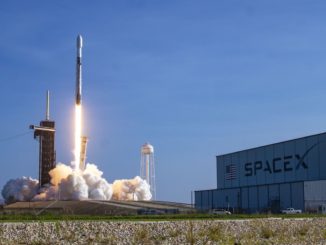
A SpaceX Falcon 9 rocket is set for launch from Cape Canaveral Space Force Station as the company aims to deploy its Starlink 6-88 mission. The liftoff is scheduled for 12 a.m. EST (0500 UTC) on January 1, 2026, marking the first Starlink mission since an operational anomaly affected one of its satellites on December 17, 2025.
Initial plans for the Starlink 6-88 mission were disrupted when SpaceX lost contact with Starlink satellite number 35956, which had been launched on November 23, 2025. The satellite was operating at an altitude of 418 km when it experienced a significant issue. According to SpaceX, the incident involved “venting of the propulsion tank” and a “rapid decay in semi-major axis by about 4 km,” leading to the release of several trackable debris objects.
On December 20, 2025, Michael Nicolls, Vice President of Starlink Engineering, shared images captured by Vantor’s WorldView-3 satellite showing the affected satellite was “largely intact.” He noted that while there were some trackable debris objects, they expected the satellite and debris to reenter the atmosphere within weeks.
Ed Lu, a former astronaut and Chief Technology Officer of LeoLabs, stated that their radar detected hundreds of objects resulting from the incident. He explained, “These objects tend to spread out along the orbital track, and have already spread out over 6000 km.”
In response to the anomaly, SpaceX has committed to enhancing its systems. The company stated, “Our engineers are rapidly working to root cause and mitigate the source of the anomaly and are already in the process of deploying software to our vehicles that increases protections against this type of event.”
Preparations for Launch
The satellites for the Starlink 6-88 mission were initially at the launch pad but were returned to SpaceX’s processing facility at HangarX on December 19, 2025. Adjustments were made in light of the previous satellite incident.
Scheduled for launch on a new Falcon 9 booster, this mission will add 29 Starlink V2 Mini Optimized satellites to the growing Starlink constellation, which currently includes over 9,300 satellites in orbit, as reported by noted astronomer Jonathan McDowell.
Meteorological conditions may influence the launch. The 45th Weather Squadron has indicated a 30 percent chance of favorable weather at the start of the launch window, improving to 70 percent as the window progresses. A cold front expected in the area might bring showers around midnight, but conditions are anticipated to improve later.
The Falcon 9 rocket is targeting a landing on the drone ship named ‘Just Read the Instructions’ in the Atlantic Ocean approximately 8.5 minutes after liftoff. If successful, this will mark the 147th landing on this vessel and the 555th booster landing for SpaceX.
Growth of Starlink Services
The upcoming launch follows a year of significant growth for SpaceX’s Starlink division. The company reported in its annual progress update that it concluded 2025 with over nine million customers across more than 155 countries. This reflects an increase of 4.6 million customers and the activation of services in over 35 new markets.
During 2025, SpaceX successfully launched 122 Falcon 9 rockets, deploying a total of 3,168 satellites into low Earth orbit. The company has also enhanced its satellite design, allowing for more efficient launches and increased capacity within the constellation.
SpaceX’s Direct to Cell service has expanded significantly, now operating in 22 countries and serving over six million customers. This service connects unmodified cellular devices directly to Starlink satellites, providing a robust communications solution.
Looking ahead, SpaceX plans to launch the next generation of Starlink satellites, known as Version 3, in 2026. These satellites are designed to deliver over 1,000 Gbps of downlink capacity and more than 200 Gbps of uplink capacity, significantly enhancing service capabilities.
As SpaceX prepares for the launch of the Starlink 6-88 mission, the company continues to navigate the complexities of satellite operations and orbital debris management, ensuring its position as a leading provider of global satellite internet services.
























