








































This week in the realm of science has brought forth intriguing findings that reshape our understanding of human evolution, animal behavior, and cosmic phenomena. Notably, researchers have made significant discoveries regarding Neanderthal fire usage, cooperative hunting among marine mammals, and captivating celestial events.
Neanderthals and the Control of Fire
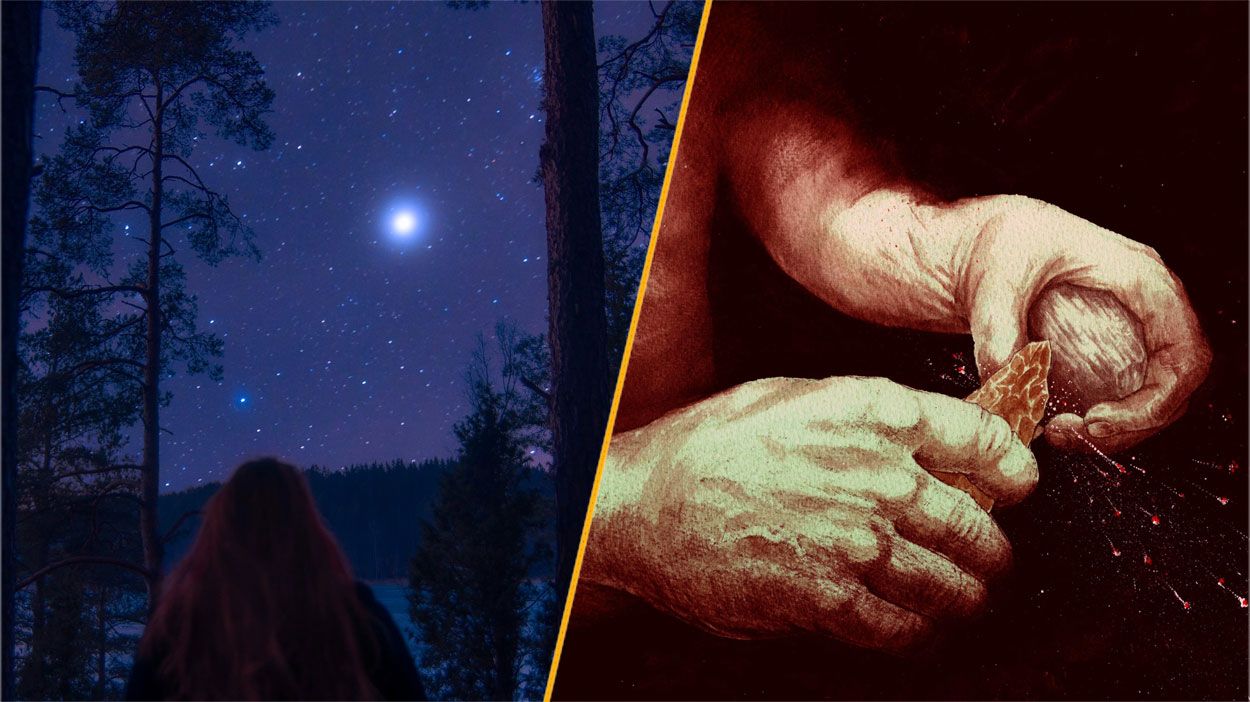
A groundbreaking study reveals that Neanderthals were capable of controlling fire as early as 400,000 years ago in England. This pushes back previous estimates by approximately 350,000 years. Archaeologists discovered evidence in Suffolk, where a rare mineral known as pyrite was found alongside flint. When struck together, these materials can produce sparks necessary for igniting fire. The presence of pyrite at this ancient site suggests that Neanderthals intentionally transported it there for fire-making purposes.
The ability to control fire has long been a pivotal moment in the evolution of human species. This new evidence adds depth to ongoing debates about Neanderthal social and cultural practices, emphasizing their complexity and adaptability.
Orcas and Dolphins: Unlikely Allies
In a fascinating revelation, a study has documented instances of orcas collaborating with Pacific white-sided dolphins during salmon hunts off the coast of British Columbia. Researchers observed these two species hunting together and sharing their catches, a behavior that challenges previous assumptions about their interactions. Typically, orcas are known to hunt dolphins in other regions, which makes this cooperation particularly remarkable.
The authors of the study claim it is the first documented instance of cooperative hunting and prey-sharing between these marine mammals. However, not all experts agree on the interpretation of this behavior. Some suggest it may instead be a form of kleptoparasitism, where one species steals food caught by another.
Cosmic Discoveries: A Look to the Skies
The cosmos is also making headlines this week with the bright binary star system known as V Sagittae, set to erupt as a supernova within the next century. Its brilliant flares will be visible from Earth, offering a spectacular show for skywatchers day and night. Additionally, astronomers have detected a mysterious X-ray signal from deep space, believed to be the remnants of a star being torn apart by two black holes.
In a more whimsical connection to the holiday season, Jupiter is expected to shine brightly in the night sky this month, prompting discussions about its possible identification as the Star of Bethlehem mentioned in biblical texts.
Archaeological Insights from Hadrian’s Wall
Recent archaeological findings at Vindolanda, a fort along Hadrian’s Wall in northern England, are reshaping perceptions of life on the fringes of the Roman Empire. Historically viewed as a militarized outpost, new evidence indicates that the area was likely a vibrant community, reflecting the diverse demographics of the empire at its height. This suggests that Roman frontier life was more complex and interconnected than previously understood.
As scientific inquiry continues to reveal the intricacies of both our planet and the universe, these discoveries not only enhance our knowledge but also spark curiosity about the past, present, and future. The interwoven tales of Neanderthals, marine mammals, and cosmic phenomena remind us of the dynamic and interconnected nature of life on Earth and beyond.
























