






































UPDATE: Mexican opposition leader Alejandro Moreno Cardenas has urgently called for a collaborative effort with the U.S. government to dismantle powerful drug cartels wreaking havoc across Mexico. Speaking with journalist Ciro Gomez, Moreno Cardenas emphasized, “We need to destroy cartels because they are destroying our country, hence the collaboration.”
His remarks come amid escalating violence linked to drug trafficking, with cartels increasingly undermining public safety and governance. The urgency of action is palpable as Moreno Cardenas questioned, “Who has the technology? Who has the equipment? Who has the capacity? The U.S. government,” highlighting the need for immediate assistance.
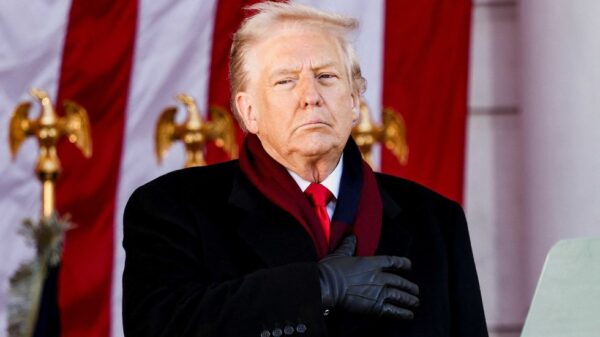
President Claudia Sheinbaum has previously acknowledged the necessity of cooperation with the U.S., particularly recalling her interactions with former President Donald Trump. However, she firmly rejected any notion of U.S. troops entering Mexican territory, stating, “Organized crime can’t be equated to terrorism,” which draws a clear line against foreign intervention.
“He understood, he was very kind,” Sheinbaum noted in her daily conference, referring to her discussions with Trump. “What’s important is to continue maintaining respect and collaboration,” she added, signaling her administration’s determination to handle the crisis independently.
In a related development, a recent New York Times report revealed that the Trump administration is revisiting its proposal for U.S. forces to accompany Mexican counterparts in operations targeting fentanyl labs. This request was initially made last year but was put on hold until now, following the recent capture of Nicolas Maduro, Venezuela’s authoritarian leader, on January 3.
U.S. officials are reportedly under pressure to reach an agreement with Mexican authorities, exploring alternatives such as enhanced intelligence sharing and expanded roles in command centers. Some U.S. officials are even advocating for drone strikes against suspected drug labs, though these operations face significant challenges in locating and neutralizing these facilities.
Currently, the CIA is conducting covert drone flights over Mexico to pinpoint potential fentanyl lab locations. Intelligence gathered is then relayed to Mexican forces, many of whom have received training from their U.S. counterparts for executing raids. However, Washington’s proposal suggests that U.S. forces join these operations to provide support, while Mexican forces remain in command.
The stakes are high as both countries grapple with the escalating crisis posed by drug trafficking and its devastating impacts on communities. The urgent plea from Moreno Cardenas underscores a growing consensus that a united front is essential to combat the pervasive threat posed by cartels.
As discussions continue, the international community is watching closely for further developments in this critical cooperation. Will a new partnership emerge to tackle the cartel crisis head-on? The situation remains fluid, and the need for swift action has never been more pressing.