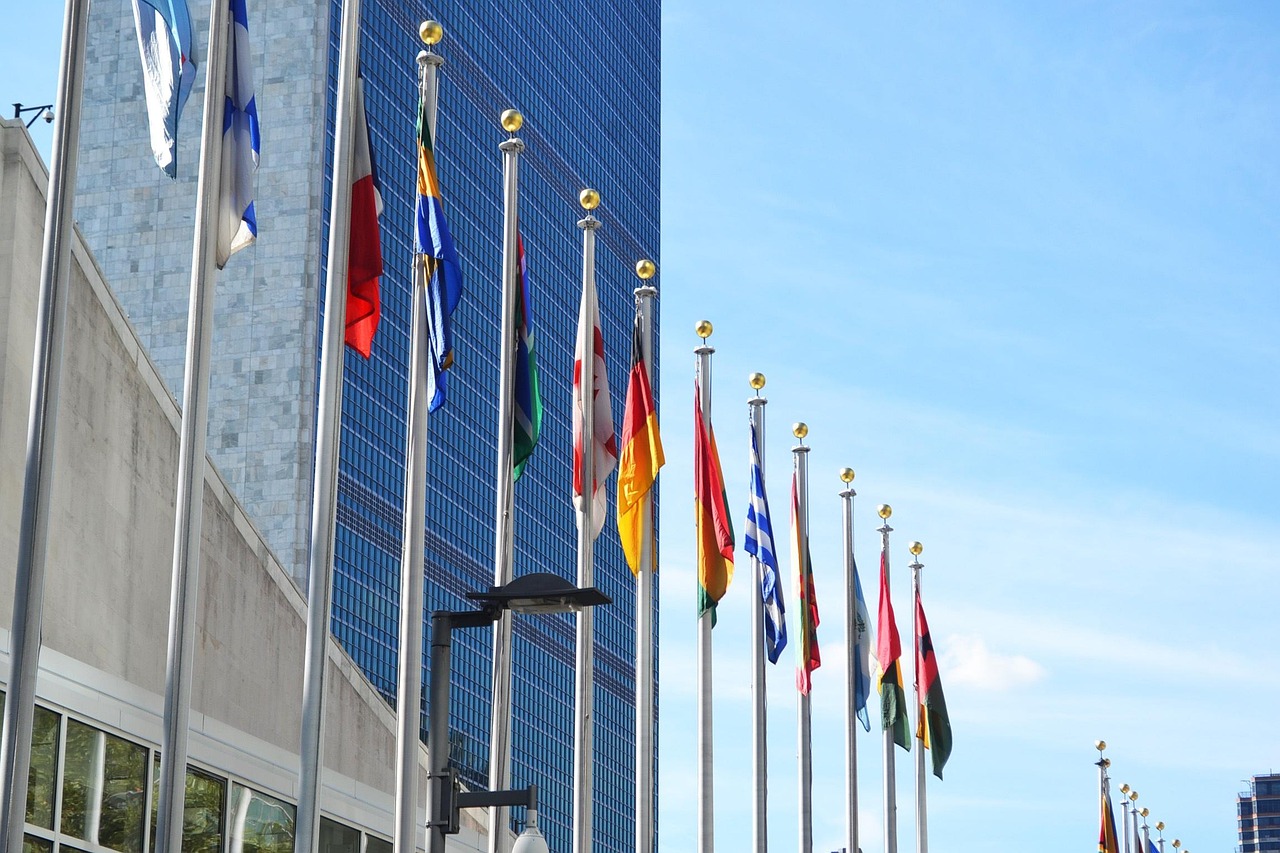
The global security landscape is experiencing significant strain as conflicts persist in regions like Ukraine, Gaza, and Sudan. The United Nations (UN) Security Council is currently hindered by political deadlock, raising concerns about its effectiveness and prompting discussions about alternative frameworks for international peace and security. Among these new initiatives is the recently unveiled Board of Peace, championed by former President Donald Trump, which some view as a potential substitute for the UN.
The UN Security Council, composed of five permanent members—China, France, Russia, the United Kingdom, and the United States—is designed to maintain international stability. However, it has frequently found itself paralyzed by geopolitical rivalries, rendering it ineffective in addressing urgent crises. For instance, the Council has been unable to take decisive action regarding the ongoing war in Ukraine or to unify on a resolution concerning the conflict in Gaza. This lack of consensus often leads to escalation of violence and deepening humanitarian crises, undermining the credibility of the UN as a whole.
Emergence of Alternative Security Mechanisms
In response to the perceived inadequacies of the UN, there has been a notable rise in alternative security mechanisms. These include ad hoc coalitions and various regional organizations, all seeking to fill the void left by an ineffective Security Council. The Board of Peace stands out due to its ambitious goals and the prominence of its leadership. While some supporters argue that it may offer a more effective route for international engagement, critics express concerns that it could undermine the UN’s established authority or serve geopolitical interests.
Despite the enthusiasm surrounding these new entities, it is crucial to recognize that none can replace the UN’s legal authority. The UN Charter remains a binding treaty with near-universal membership, dictating the norms surrounding the use of force, sanctions, and peacekeeping operations. Therefore, the challenge lies not in replacing the UN but in determining how these new initiatives can work in conjunction with it to reinforce global peace and security.
A Collaborative Future for Global Governance
The current moment presents a pivotal choice: new initiatives can either exacerbate fragmentation or contribute to a more resilient security architecture. If organizations like the Board of Peace operate as rivals to the UN, the result could be confusion and weakened international norms. Conversely, if these bodies choose to collaborate—sharing information and coordinating diplomatic efforts—they could enhance the UN’s capacity to respond to emerging crises.
To foster a cooperative model, a proposed “UN-Plus” Security Network could integrate existing UN structures with new initiatives. This forum would convene regularly to coordinate responses, similar to the informal and flexible nature of the G20. Additionally, leveraging the UN’s global presence and the agility of new entities could lead to enhanced early-warning systems and crisis data sharing, improving response times.
Involving regional organizations, such as ECOWAS, the African Union, and ASEAN, can also add valuable local insights and leadership in peace operations, while the UN maintains a role in providing legitimacy and global coordination.
A critical component of this collaboration involves ongoing reform of the Security Council itself. Since its establishment in 1945, the world has undergone significant changes, and the Council has struggled to adapt. Expanding its membership, revising veto rules, and creating renewable seats could enhance its representation and effectiveness, addressing some of the frustrations driving the emergence of parallel institutions.
Ultimately, the interconnectedness of today’s world demands a multifaceted approach to global security. While the UN is not without its flaws—often slow and sometimes divided—it remains a cornerstone of international law. Initiatives like the Board of Peace can complement its efforts, bringing renewed energy and political will where needed.
The path forward is clear: a commitment to collective security that harnesses the strengths of both established and emerging frameworks. By fostering partnerships rather than rivalries, the global community can work towards a more cohesive and effective system of governance capable of addressing the challenges of an increasingly complex world.