








































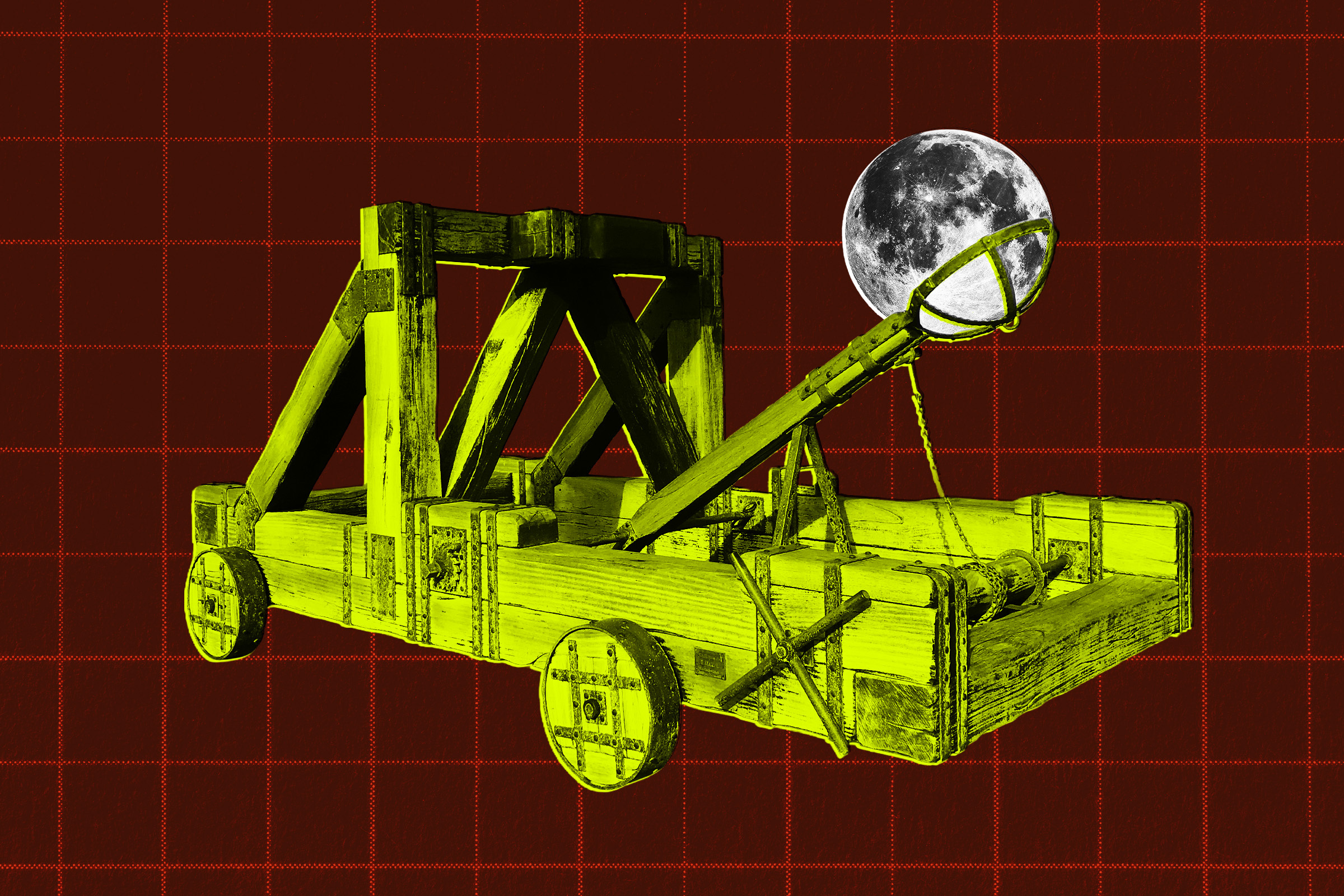
Elon Musk has outlined ambitious plans for a lunar factory and a massive electromagnetic catapult capable of launching satellites into space. During a recent meeting with employees at xAI, the artificial intelligence company acquired by SpaceX, Musk emphasized the need for a facility on the Moon to manufacture AI satellites. The proposed catapult would serve as a launch system, potentially revolutionizing the way payloads are sent into orbit.
Musk’s vision includes a factory designed to enhance the computing power for his AI initiatives, which he believes should not be limited by earthly constraints. “You have to go to the Moon,” Musk stated, as reported by the New York Times. He expressed enthusiasm about the possibilities of advanced intelligence, stating, “It’s difficult to imagine what an intelligence of that scale would think about, but it’s going to be incredibly exciting to see it happen.”
This latest focus on lunar development marks a significant shift for Musk, who has historically dismissed lunar missions as distractions from his primary goal of colonizing Mars. His aerospace company, SpaceX, recently acquired xAI in advance of what is anticipated to be a landmark IPO. Musk argues that establishing space-based AI is critical for the scalability of the technology. He envisions creating data centers in Earth’s orbit, where they would benefit from access to virtually unlimited solar energy.
Shifting Focus from Mars to the Moon
Musk’s newfound enthusiasm for lunar projects represents a notable change in strategy. Previously, he often criticized lunar missions, suggesting they diverted attention from the ultimate aim of making life multi-planetary. His mantra has focused on sending humans to Mars, with optimistic timelines indicating that the first mission would launch in 2022 and astronauts would arrive by 2025.
Despite this pivot, Musk insists that he is not abandoning Mars. In the same meeting, he described the Moon as a necessary stepping stone. His plan involves constructing “a self-sustaining city on the Moon” before advancing to Mars. He further elaborated on the timeline for these initiatives in a recent tweet, suggesting that establishing a lunar city could be achievable within less than ten years while Mars could take over twenty years.
Musk stated, “SpaceX has already shifted focus to building a self-growing city on the Moon, as we can potentially achieve that in less than 10 years, whereas Mars would take 20+ years.” He added that SpaceX will also aim to develop a Martian city in about five to seven years, emphasizing that securing the future of civilization is the primary goal.
While the idea of a lunar factory and catapult may sound like science fiction, Musk’s plans reflect a broader vision of human expansion into space. He has consistently presented ambitious timelines and objectives, and this latest proposal illustrates his ongoing commitment to exploring and utilizing extraterrestrial resources.
Musk’s plans have sparked interest and concern within the aerospace community, as they raise questions about the feasibility of such projects and their implications for the future of space exploration. As these initiatives unfold, the world will be watching closely to see how Musk’s vision for the Moon and Mars evolves.