
































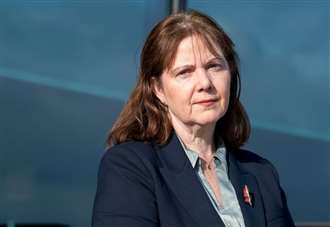
URGENT UPDATE: East Midlands Mayor Claire Ward has just announced that her decisions on local government reorganisation will prioritize the needs of the region, despite pressure from the Labour Party. As the clock ticks towards 2026, when the government will seek her input on new council boundaries, Ward remains tight-lipped about her specific preferences.
In a statement to the Local Democracy Reporting Service, Ward emphasized, “What will influence me is what’s right for this region.” Her commitment comes as the government moves forward with plans to simplify local governance, merging existing councils into larger, more efficient units.
The Labour government revealed the local government reorganisation plan in December, aiming to streamline services across the country. Currently, residents in Nottingham depend on the Nottingham City Council for all municipal services, while those in the county juggle responsibilities between Nottinghamshire County Council and local borough councils. The new structure is expected to merge these layers into fewer, more comprehensive councils.
Ward has set clear conditions for her stance, advocating for the creation of four unitary authorities to ensure stability and community identity. “They need to be close enough to their communities and have identity with their communities, but big enough to make them work and be sustainable,” she stated.
The current councils are actively voicing their preferences, with submissions already made to the government. In an earlier council meeting, Martin Wright, a councillor from Mansfield District Council, expressed skepticism about the relevance of their preferences, suggesting that ultimately, the decision lies with the Mayor and the government.
In response, Ward reassured residents that her authority would provide the necessary stability amid the impending changes. “We will be that stability,” she declared, underscoring her belief that the four-unitary model would benefit the community.
Ward also touched on the potential public response to the changes. “If you asked the public whether they’d like fewer politicians, the answer is probably yes,” she noted, adding that a simpler system would improve the overall service experience for residents. She highlighted the possibility of reinvesting savings from the reorganisation into frontline services.
As discussions continue, all eyes will be on Ward and her forthcoming review in 2026, where she will outline her views on the preferred structure. The urgency of these developments cannot be overstated, with the future of local governance hanging in the balance. Residents and officials alike are encouraged to stay engaged as this story unfolds.
Keep following for the latest updates on local government reorganisation and its impact on communities across the East Midlands.