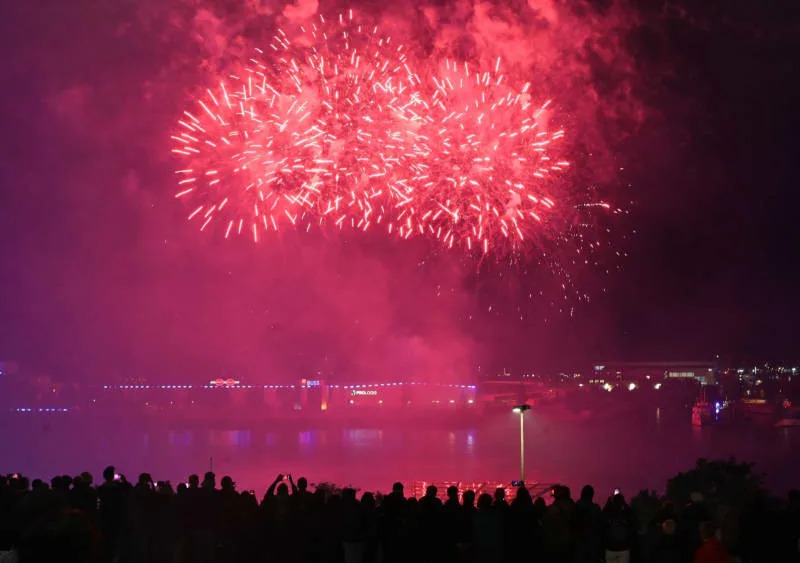
Demand for fireworks in Germany is experiencing a notable increase ahead of New Year’s Eve, despite mounting criticism from various groups regarding the environmental and safety impacts of pyrotechnics. According to industry leaders, the quantity of fireworks available in stores this year is approximately 10% higher than in 2022.
The country’s largest fireworks manufacturer, WECO, reported that its inventory of rockets, firecrackers, and fireworks batteries has expanded significantly. Rival company COMET also noted a moderate uptick in supply. The German Association of the Pyrotechnics Industry anticipates an overall increase in availability across the sector. Fireworks sales are permitted in Germany from December 29 to December 31, with any unsold items returned to manufacturers. WECO indicated that last year’s return rate was lower than expected, indicating robust consumer interest.
WECO remains a key player in the market, employing around 260 people at its facilities in Eitorf and Kiel. Despite being the largest domestic manufacturer, it only produces 15% of its fireworks, with the remainder imported primarily from China. In the 2023-2024 fiscal year, WECO’s turnover exceeded €136 million ($160 million), showcasing the industry’s financial vitality.
Amid this rising demand, there are significant concerns regarding the impact of fireworks on animals and the environment. Animal welfare advocates argue that the noise from fireworks can stress wildlife, particularly birds, disrupting their winter survival. Urban areas like Berlin often compare New Year’s celebrations to war zones due to the chaos and debris created by pyrotechnics. Environmental groups highlight the waste generated and the resources consumed during firework displays.
The debate over fireworks has garnered attention from various stakeholders, including the GdP police union, which supports a ban due to increasing incidents of violence involving fireworks. The union warns that police officers are increasingly targeted during New Year’s celebrations.
Efforts to legislate a ban on fireworks have seen mixed results. Interior ministers from Germany’s 16 states have failed to reach a consensus, and a recent court decision overturned a ban on private fireworks displays on the North Sea island of Föhr.
Despite the opposition, WECO’s sales director, Oliver Gerstmeier, views the rising demand for fireworks as evidence that the majority of the population favors their use. He stated, “Ringing in the New Year with a colourful firework is a beautiful thing for many people. One should respect that instead of discrediting it with repeated debates on a ban.”
The fireworks industry considers pyrotechnics an integral part of New Year’s Eve celebrations in Germany. Klaus Gotzen, head of the pyrotechnics sector association, notes a trend towards combined fireworks setups, where a single fuse ignites a series of fireworks for a display lasting several minutes.
As the countdown to New Year’s Eve approaches, the debate over the safety and environmental impact of fireworks continues, reflecting the tensions between tradition and modern concerns. The industry maintains that issues stem from a small number of troublemakers, while the broader public appears to still embrace the vibrant displays that light up the night sky.