








































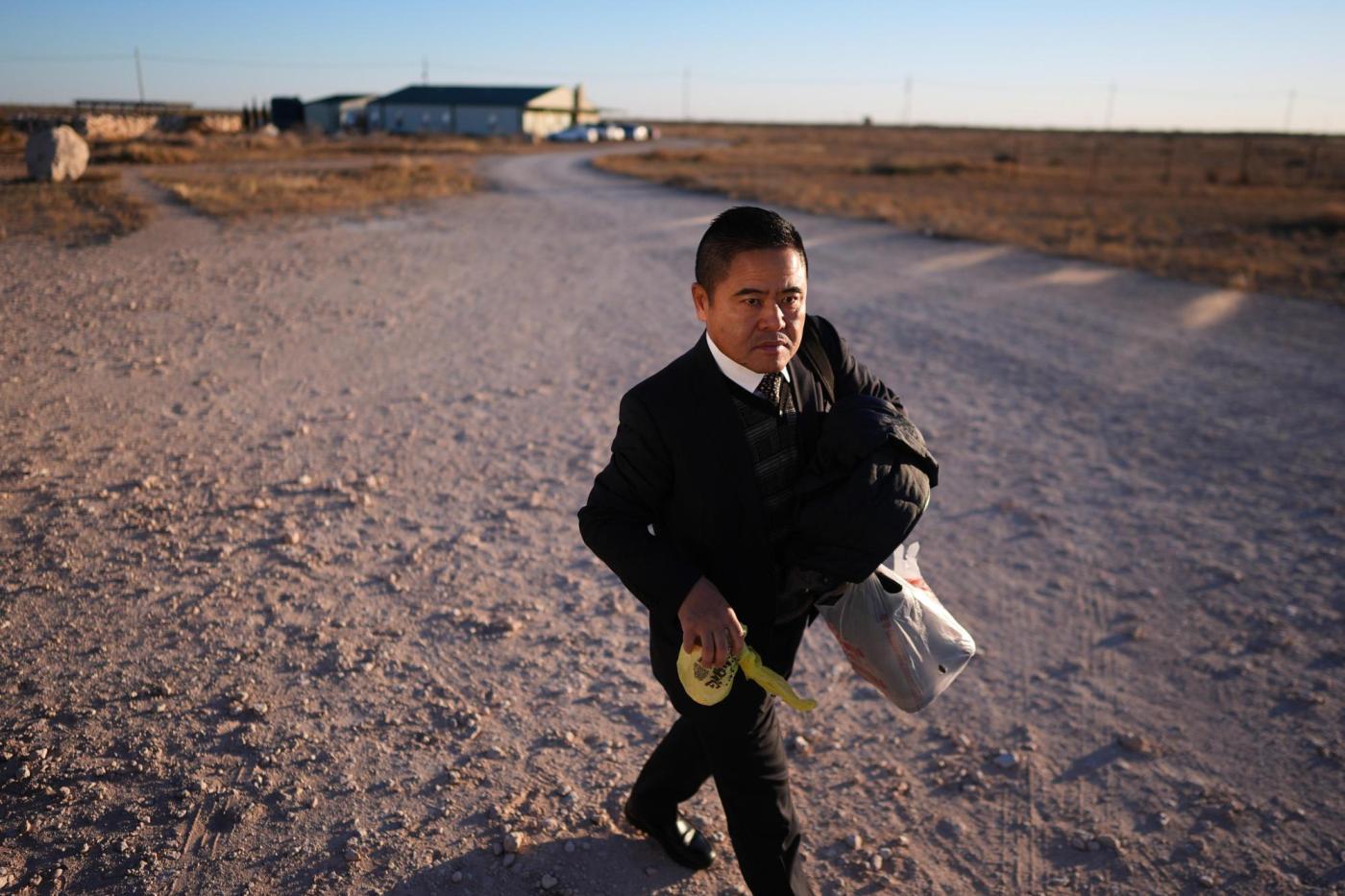
UPDATE: Chinese fugitive Li Chuanliang, a retired official who exposed government corruption, is now living in Midland, Texas, after fleeing China to escape a massive manhunt. Authorities in Beijing are relentlessly pursuing him, utilizing advanced surveillance technology to track his every move.
In an alarming turn of events, Li received a dire warning while recovering from cancer on a Korean resort island: “Don’t return to China. You’re now a fugitive.” Shortly after, he fled to the U.S. on a tourist visa to seek asylum, only to find that the Chinese government continues to hunt him down even from abroad.
Li has reported that his communications are being monitored, and his assets have been seized. The Chinese government has identified and detained over 40 friends and family members, including his pregnant daughter, using facial recognition software to track down cab drivers and associates. “They track you 24 hours a day. All your electronics, your phone—they’ll use every method to find you,” Li stated, highlighting the pervasive reach of Beijing’s surveillance.
The Chinese government’s use of surveillance technology, much of it developed by U.S. companies like IBM, Oracle, and Microsoft, has raised serious concerns about human rights abuses and the repression of dissent. This technology has been instrumental in Beijing’s efforts to identify and punish nearly 900,000 officials last year alone, nearly five times the number in 2012. Critics argue that such measures are aimed at stifling opposition and instilling fear.
Li is one of many targeted under infamous operations known as “Fox Hunt” and “Sky Net,” which aim to apprehend former officials and dissidents who have fled abroad. Reports indicate that more than 14,000 people have been coerced to return to China, with many facing severe repercussions upon their return.
Li, accused by Beijing of corruption totaling around $435 million, denies all charges, asserting that he is being persecuted for his outspoken criticism of the Chinese government. He has launched the Chinese Tyrannical Officials Whistleblower Center from the U.S. to help others in similar situations.
The implications of this situation are profound. As Li continues to speak out against the corruption he witnessed during his tenure as a government official, the U.S. faces a challenging dilemma regarding how to protect individuals like him while managing relations with China. Both the FBI and the White House have acknowledged the threats posed by Beijing to individuals exercising their rights in the United States.
“Electronic surveillance is the arteries for China to project power into the world,” Li warned. “It’s absolutely terrifying.” His plight raises urgent questions about the effectiveness of U.S. policies in safeguarding the rights of asylum seekers against foreign government pressures.
As of now, Li’s future remains uncertain. The Trump administration has paused all asylum applications. Should he be forced to return to China, he risks facing a trial in absentia and potentially life imprisonment. Meanwhile, he continues to share his story through social media and YouTube, emphasizing the need for vigilance against oppression.
The global community is watching closely as Li’s case unfolds, illustrating the lengths to which authoritarian regimes will go to suppress dissent, even beyond their borders. As Li stated, “Today, it’s me. Tomorrow, it might be you.”
This story is developing rapidly, and updates will be provided as new information becomes available.