








































NASA’s Chandra X-ray Observatory has reached a significant milestone, enhancing our understanding of the universe with the release of the latest version of the Chandra Source Catalog (CSC). This comprehensive catalog now includes over 1.3 million unique X-ray detections, solidifying Chandra’s position as the premier X-ray telescope in the world.
The CSC encompasses X-ray data collected until the end of 2020, showcasing more than 400,000 unique sources, both compact and extended. These observations provide invaluable information about the precise positions of X-ray sources and the energies detected, facilitating research that combines Chandra’s data with observations from other telescopes, including NASA’s James Webb and Hubble Space Telescopes.
Unveiling the Cosmic Landscape
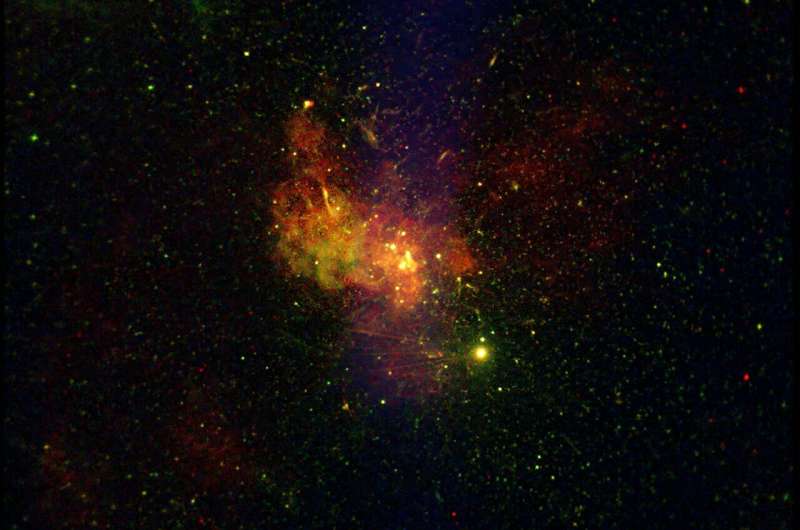
One of the most remarkable illustrations of the CSC’s depth is a new image of the Galactic Center, the area surrounding the supermassive black hole known as Sagittarius A*. This image, which spans approximately 60 light-years, reveals over 3,300 individual sources emitting X-rays, compiled from 86 observations that total more than three million seconds of observation time.
Chandra’s ability to capture such intricate details highlights the importance of its long-term observations, which have allowed scientists to map the complexities of X-ray emissions across the universe. The catalog serves as a vital resource for astronomers looking to explore cosmic phenomena across different wavelengths of light.
Transforming Data into Sound
In a creative leap, Chandra has also released a sonification of its data, translating astronomical information into sound. This innovative representation covers 22 years of Chandra observations, beginning from its launch through 2021. The sonification reflects the multiple sightings of X-ray sources over time, allowing listeners to experience the rhythm of the cosmos.
The visual component of this sonification presents a unique map of the sky, akin to world maps depicting Earth. The core of the Milky Way is centrally located, with the Galactic plane stretching horizontally. Each detection is represented by a circle, with its size indicating the frequency of sightings in that area. As Chandra remains operational, the display transitions to indicate ongoing observations beyond 2021.
The latest version of the Chandra Source Catalog is publicly accessible at https://cxc.cfa.harvard.edu/csc/, inviting researchers and astronomy enthusiasts alike to delve into the extensive archive of cosmic data. This achievement not only underscores Chandra’s contributions to astrophysics but also enhances collaborative research efforts in the field, providing a deeper understanding of the universe’s mysteries.