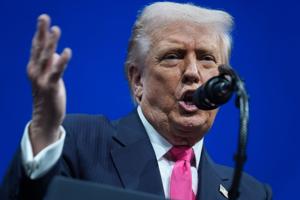
President Donald Trump has issued an executive order aimed at persuading U.S. states to refrain from imposing regulations on artificial intelligence (AI). The order, which was announced on March 15, 2024, reflects the administration’s belief that state-level regulations could hinder innovation and economic growth in the rapidly evolving AI sector.
The executive order arrives amid a growing debate on the balance between regulation and innovation. Advocates, including many within the Republican Party, assert that a lack of stringent oversight will promote entrepreneurial activity and technological advancement. They argue that unnecessary regulations create barriers that could stifle the potential of AI technologies to drive economic growth and enhance productivity.
Critics, however, are concerned that this approach primarily benefits large AI companies, allowing them to operate with minimal scrutiny. They argue that without proper regulations, there is a risk of monopolistic practices and ethical concerns that could arise from unregulated AI development. The U.S. Department of Commerce has been enlisted to assist in the implementation of the order, aiming to create a more unified national framework for AI.
Implications for the AI Industry and State Governance
The implications of Trump’s executive order are significant for both the AI industry and state governance. By pushing for a more lenient regulatory environment, the administration is signaling its commitment to fostering a competitive landscape for AI innovation. Proponents of this approach believe that states should not impose their own rules, which could lead to a patchwork of regulations that complicate business operations.
On the other hand, the move raises questions about the need for oversight in an industry that has profound implications for society. Issues such as data privacy, algorithmic bias, and job displacement due to automation are at the forefront of discussions about AI regulation. Critics argue that without a comprehensive regulatory framework, these issues may be overlooked, potentially leading to negative societal consequences.
The executive order also comes as AI technologies continue to evolve rapidly. Major tech companies are investing heavily in AI research and development, with billions of dollars at stake. The desire to remain at the forefront of this technological revolution is driving many stakeholders to advocate for less restrictive regulations.
Future of AI Policy in the United States
As the U.S. navigates the complexities of AI regulation, the future of AI policy remains uncertain. The executive order may catalyze a broader movement towards federal oversight, as states adjust to the new directives. However, the response from state governments will likely be varied, with some states potentially seeking to implement their own regulations to address local concerns.
The balance between fostering innovation and ensuring ethical practices will be a critical challenge for policymakers. As the AI landscape continues to change, stakeholders across the spectrum—business leaders, policymakers, and advocacy groups—will need to engage in constructive dialogue to shape a regulatory framework that promotes growth while safeguarding public interest.
Ultimately, Trump’s executive order marks a pivotal moment in the ongoing conversation about AI regulation in the United States. The decision to limit state regulations could set a precedent that influences the development and deployment of AI technologies for years to come.