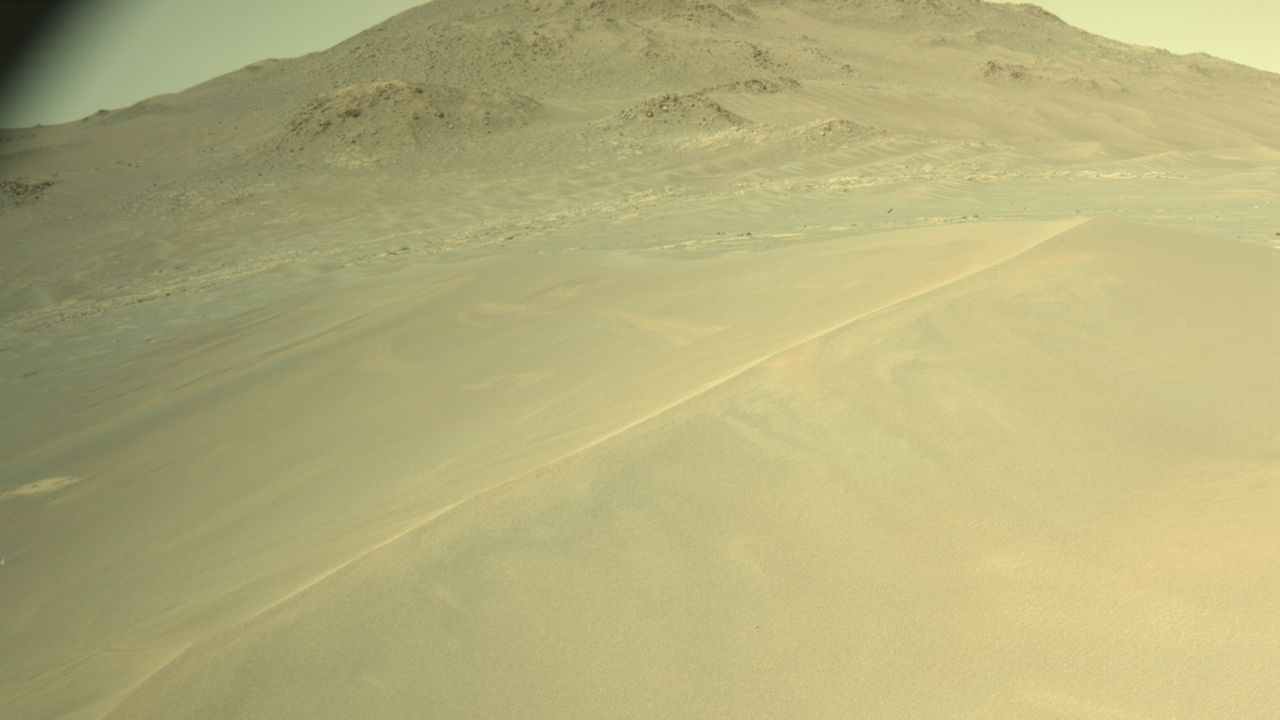
NASA’s Perseverance rover has provided an unprecedented look at Martian sand features known as aeolian megaripples, which can reach heights of approximately 6.5 feet (about 2 meters). In a mission update shared late last month, the rover team highlighted the significance of these oversized ripples, which are generally regarded as “mostly inactive” and serve as a record of historical wind patterns and atmospheric conditions on Mars.
The megaripple, nicknamed “Hazyview,” is located within the “Honeyguide” ripple field near the rim of Jezero Crater. Perseverance has been studying this area since its landing in February 2021. Unlike smaller ripples on Earth that continually shift due to wind, megaripples on Mars can remain stable for extended periods, effectively acting as time capsules that offer insights into the planet’s past environmental conditions.
Understanding Martian Wind Patterns
On Earth, wind constantly reshapes sand into migrating dunes and ripples. Although the Martian atmosphere is considerably thinner, wind remains a powerful force capable of eroding bedrock into sand-sized particles. The rover’s images reveal that while megaripples can be quite resistant to movement, they can also provide crucial information about Mars’s climatic history.
The Perseverance team explained that when atmospheric water interacts with dust on the surface of a megaripple, it forms a salty, dusty crust. This crust increases the cohesion of the grains, making it more difficult for wind to alter the deposit. Therefore, many Martian megaripples may indicate earlier wind regimes and interactions between water and dust, rather than being continuously updated with each gust.
Some megaripples show signs of movement, suggesting that rare periods of strong winds could erode these crusts or partially reactivate the sand, thus shifting the surface once more. To further investigate this phenomenon, Perseverance has moved to the “Honeyguide” ripple field to conduct intensive studies.
The Importance of Hazyview
The “Hazyview” megaripple is central to ongoing research efforts. The rover’s team reported that it collected over 50 observations using a diverse range of instruments, including SuperCam, Mastcam-Z, MEDA, PIXL, and WATSON. This comprehensive analysis aims to determine the structure of the ripple and assess whether it is truly dormant.
While studying sand might seem tangential to the broader quest for signs of ancient life on Mars, megaripples play a pivotal role in both scientific understanding and future exploration planning. From a scientific perspective, they offer a glimpse into the most recent developments in Martian surface evolution. If the megaripples are indeed inactive, they preserve valuable records of earlier winds and the chemistry of water-dust interactions. Conversely, if they can be reactivated, this indicates that even the present-day Martian environment can induce significant surface changes.
Practically, the team underscored that the chemical composition and cohesion of Martian soils will impact future operations. This will influence how vehicles gain traction, how dust interacts with equipment, and even the accessibility of certain resources for in-situ use.
As Perseverance continues its journey across the Red Planet, it remains committed to uncovering the geological history encoded in Martian rocks while paving the way for future missions to explore Mars further. For those interested in following these developments, more information about NASA’s Perseverance rover and its ongoing mission can be found on NASA’s official website.