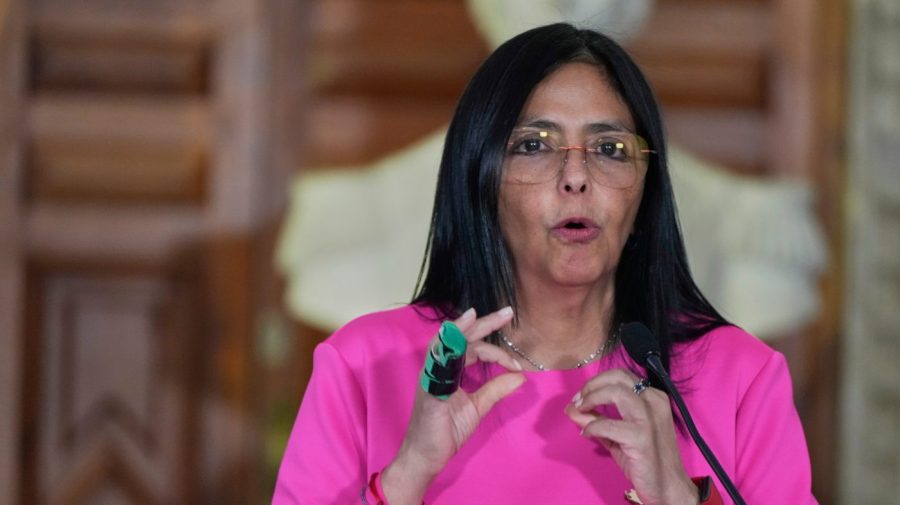
Venezuela’s interim leader, Delcy Rodríguez, is navigating a complex political landscape as she responds to the demands of the Trump administration while maintaining the support of loyalists to her predecessor, Nicolás Maduro. This delicate balancing act is crucial for Rodríguez, who assumed leadership amid a turbulent period marked by economic hardship and political strife.
Rodríguez, known for her astute political maneuvering, faces significant challenges. The Trump administration has outlined high expectations, seeking cooperation on issues ranging from human rights improvements to economic reforms. At the same time, she must appease Maduro’s long-standing supporters, who maintain substantial influence over the Venezuelan military, security forces, and the national economy.
Political Dynamics in Venezuela
The political environment in Venezuela is fraught with tension. Rodríguez understands that any misstep could jeopardize her position. Support from Maduro’s inner circle is critical, as these individuals control key sectors of the country’s power structures. Their backing not only ensures stability but also secures her authority amidst international pressures.
Rodríguez’s ability to manage these competing interests will be pivotal in shaping Venezuela’s future. The country continues to grapple with a dire humanitarian crisis, with over 5 million citizens having fled since 2015 due to economic collapse and political repression. The international community, particularly the United States, has been vocal in its criticism of the Maduro regime, further complicating Rodríguez’s position.
In an effort to demonstrate her commitment to reform, Rodríguez has initiated discussions with various political factions. Her approach aims to unify disparate groups while addressing the urgent needs of the Venezuelan populace. The hope is to create a more stable environment that can attract foreign investment, which is vital for revitalizing the economy.
International Relations and Economic Implications
The relationship between Venezuela and the United States remains a focal point of Rodríguez’s strategy. The Trump administration’s insistence on accountability and transparency could open avenues for dialogue, provided that Rodríguez can showcase tangible progress.
According to analysts, Venezuela’s economy is projected to contract by another 5% in 2023, underscoring the urgency of reform. Rodríguez is tasked with implementing policies that can reverse this trend while maintaining the support of Maduro’s loyalists. This requires a nuanced understanding of both domestic and international expectations.
Rodríguez’s tenure exemplifies the challenges faced by leaders in politically volatile regions. As she seeks to balance the demands of external powers with internal political realities, her actions will significantly impact Venezuela’s trajectory in the coming months. The stakes are high, and the path ahead remains fraught with uncertainty.
In conclusion, Delcy Rodríguez’s leadership represents a critical juncture for Venezuela. Her ability to forge a path that satisfies both the Trump administration and Maduro’s loyalists could determine the nation’s stability and future economic recovery. As the world watches, the implications of her decisions will resonate far beyond Venezuela’s borders.