The United States military’s ongoing operations against alleged drug trafficking vessels in the Caribbean and eastern Pacific have resulted in significant controversy regarding the treatment of survivors from these strikes. At least five individuals have survived initial attacks, which have claimed the lives of several crew members and disabled their vessels. The differing responses to these survivors have raised questions about the military’s policies and legal implications.
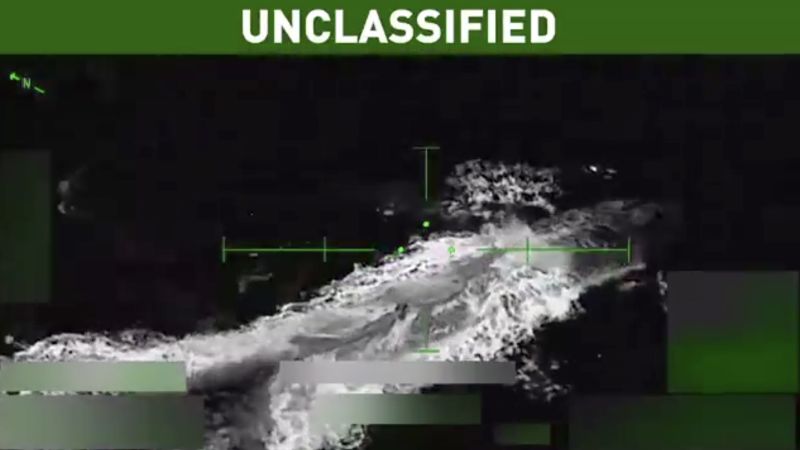
On September 2, 2023, a US airstrike targeting a drug boat resulted in the deaths of multiple crew members. Two survivors were detained by the US Navy but were later returned to their home countries. In stark contrast, another survivor from this strike was left adrift and is now presumed dead. Most notably, the military conducted a follow-up strike that killed two additional survivors who had clung to their damaged vessel, prompting concerns over potential violations of international law.
According to reports, this second strike was the first of its kind against suspected drug vessels, leading to the deaths of 87 individuals across 23 boats. Following the incident, Democratic lawmakers sought clarity on the follow-up attack, with some suggesting it may have breached the law of armed conflict. Adm. Frank “Mitch” Bradley, who commanded the Joint Special Operations Command at the time, met with lawmakers to explain the decision to conduct the second strike. He indicated that the strike was necessary to destroy remnants of the vessel believed to still contain cocaine, thereby preventing the survivors from potentially escaping and continuing their trafficking activities.
Critics, including Sarah Harrison, a former associate general counsel at the Pentagon, have voiced concerns about the legality of the follow-up strike. Harrison emphasized that international law mandates humane treatment for individuals who are no longer able to fight, expressing that the actions taken by the military could be classified as unlawful.
The situation changed dramatically on October 16, 2023, when the US military executed a strike on a submarine allegedly transporting narcotics. Following this attack, two survivors were rescued and subsequently returned to their home countries, Ecuador and Colombia. A US official clarified that these men were the only survivors from the submarine, as they were found on life rafts without access to the drugs on board.
Secretary of Defense Pete Hegseth stated that there are established protocols for dealing with survivors, asserting that the circumstances surrounding the October 16 strike were different from those of the September follow-up attack. He explained that the two men had swum away from the strike and were recovered safely, which was not the case for the individuals involved in the earlier strike.
The legal implications of detaining survivors have posed challenges for the US military, especially under the Trump administration. The uncertainty surrounding the legal authority for holding these individuals without trial could have led to further complications if they had remained in custody.
Most recently, on October 27, 2023, a separate operation targeting four boats resulted in 14 fatalities, with one crew member reportedly surviving the attack. The Mexican Navy was alerted by the Pentagon about the possible survivor, which surprised Mexican officials as they had not been notified in advance. Mexican President Claudia Sheinbaum later confirmed that there was “no new information” regarding the survivor’s status, highlighting the ongoing search efforts in accordance with maritime protocols.
The disparate treatment of survivors has drawn attention to the military’s operational procedures, particularly when considering the ethical implications of their actions. As the pace of US strikes has slowed, with a notable gap of 19 days before the latest attack on December 4, 2023, Hegseth acknowledged the need for continued scrutiny into the military’s approach. He assured that the US would maintain its commitment to striking narcotics trafficking operations, despite the controversies surrounding the treatment of survivors.