







































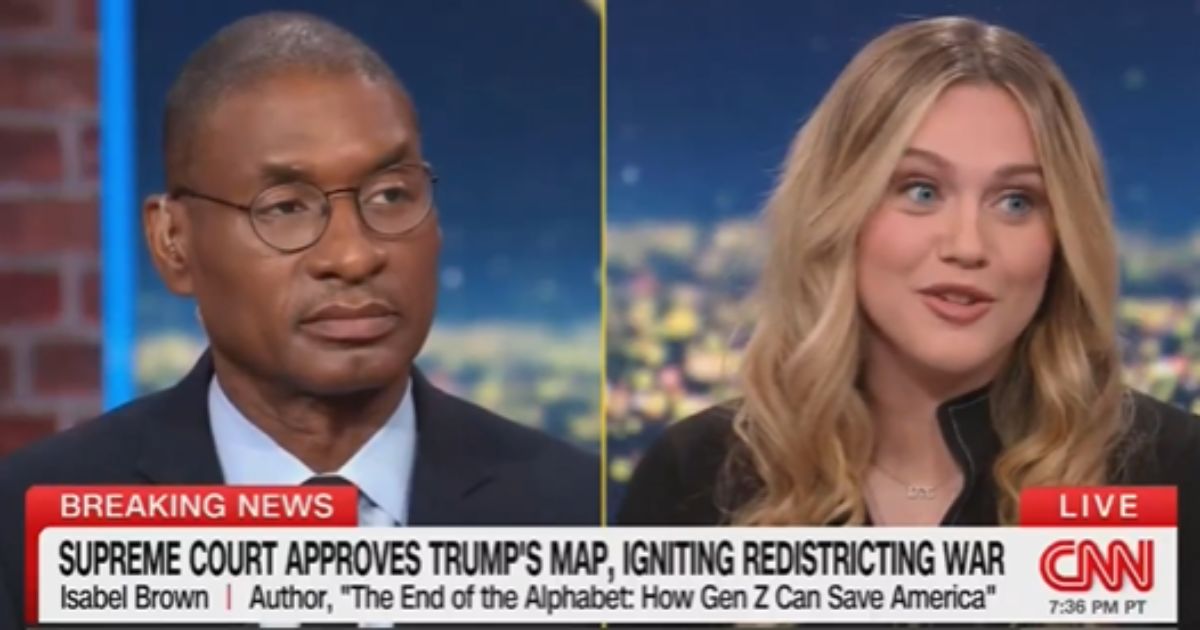
Former New York Times columnist Charles Blow faced significant pushback during a heated discussion on redistricting on “CNN NewsNight” on Thursday. Blow accused conservative podcaster Isabel Brown of racism while debating the implications of the Supreme Court’s recent decision allowing Texas to implement its congressional maps, which were drawn following a controversial special session.
The Supreme Court’s ruling came after Texas Democrats attempted to block redistricting efforts by fleeing the state to Democratic-controlled areas, such as New York and Illinois. Brown countered Blow’s accusations by labeling the use of race in the discussion as “really pathetic.” She pointed to California’s similar actions, where Republican lawmakers pursued increased representation for their party despite the state’s predominantly Democratic leanings.
“Breaking news, a Republican state tried to create more Republican congressional seats under a Republican governor and conservative legislature,” Brown stated. She emphasized that California is also attempting to gain more seats for the Democratic Party, especially as many conservatives have left the state amid the governance of Gavin Newsom.
The debate escalated as Blow insisted that the creation of Republican-leaning districts inherently disenfranchises minority voters. “How did they do it? By disenfranchising black and brown people,” Blow claimed. Brown responded by asserting that the focus should be on the representation of the state’s majority, regardless of race.
Joe Borelli, a former Republican City Councilman from New York City, joined the conversation to challenge Blow’s assertions. He argued that the political dynamics in states like California reveal a disconnect between voter preferences and congressional representation. “Do you think it’s a coincidence that 40 percent of Californians voted for Donald Trump but only nine out of 51 members of Congress are in Republican-plus districts?” Borelli asked.
Borelli further highlighted the disparities in representation across various states. He noted that Republicans are virtually absent from New England congressional districts, despite substantial Republican voter support. “Have you ever seen Connecticut’s first district? It’s like a crescent moon,” he remarked, illustrating how districts have been drawn to minimize Republican influence.
Redistricting occurs every ten years and is a critical process that follows the U.S. Census. It involves redrawing congressional districts to reflect population changes. Following the 2022 midterm elections, New York also faced scrutiny for its congressional map, which critics argue jeopardized the positions of several Republican representatives.
Borelli pointed out the trend of states adjusting their congressional maps to align with their political majorities. “New York was the first state to try midterm redistricting last year. This is a domino effect that’s not surprising,” he noted, suggesting that both parties engage in similar strategies to secure their political interests.
As discussions continue regarding the fairness and motives behind redistricting, the implications for minority representation and party power dynamics remain contentious. The debate encapsulates a broader conversation about race, representation, and political strategy in the United States, reflecting the complexities at play in a rapidly changing political landscape.