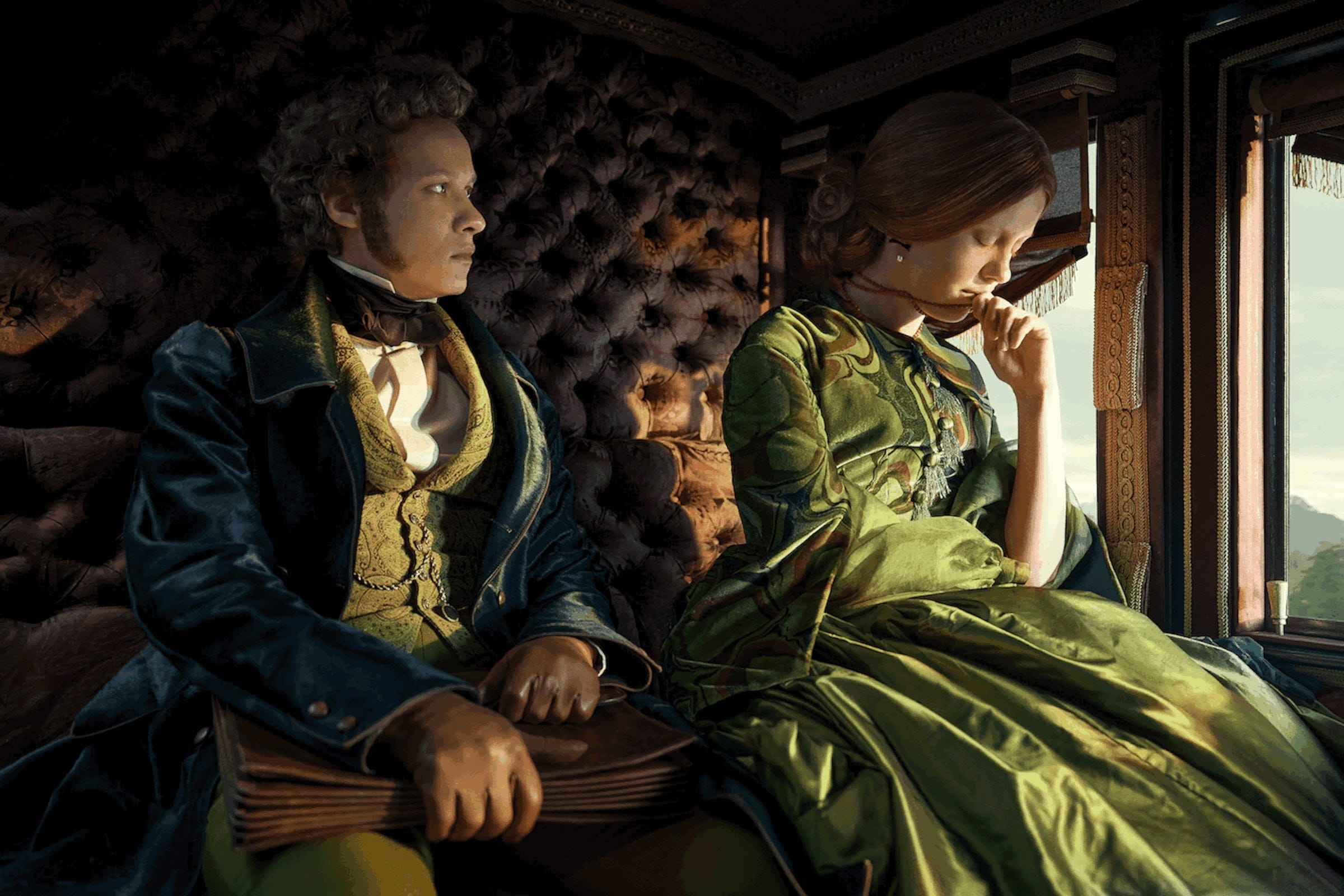
Kate Hawley, the costume designer behind Guillermo del Toro’s upcoming film, has crafted a visual landscape that merges the ethereal with the grotesque in his adaptation of Frankenstein. The film, set to be released in February 2026, showcases a haunting aesthetic that transcends traditional horror, reflecting del Toro’s unique vision while also drawing on rich historical references.
Designing a Haunting Aesthetic
Hawley describes her approach to costuming as akin to conducting an orchestra, where every element must work in harmony. “When you are working with someone like Guillermo, he is a conductor, and we are all different parts of his orchestra,” she stated during a recent interview from her farm in New Zealand. Having collaborated with del Toro on previous projects like Crimson Peak and Pacific Rim, she understands the delicate balance between visual storytelling and thematic depth.
In this adaptation, del Toro has shifted the timeline from the late-Enlightenment period of Mary Shelley’s novel to the 1850s, a time marked by rapid advancements in technology and medical science. This historical context informs the costumes, with a recurring spine motif appearing in the outfits of both Mia Goth and Jacob Elordi. Goth’s character, Elizabeth, is portrayed as a curious student of biology and entomology, reflected in her wardrobe featuring X-ray and fractal-inspired prints, along with colors reminiscent of beetle wings.
Reimagining Iconic Characters
Elordi’s portrayal of the Creature deviates from the typical monstrous depiction, instead presenting a more vulnerable figure, described by Hawley as “like a newborn bird, with that almost fetal, translucent quality of his skin.” This fresh perspective emphasizes the character’s fragility rather than fear, inviting audiences to see the humanity within the monster.
In contrast, Oscar Isaac’s Victor Frankenstein channels Romantic aesthetics, sporting billowing poet’s blouses and a rock-and-roll vibe influenced by icons such as Mick Jagger and David Bowie. Hawley notes, “Guillermo talked about the Romantics as the first punks. We forget that element of them. We give history the layer of respectability it never wanted.” This approach adds another layer of complexity to the film’s characters.
Hawley collaborated with Tiffany & Co. to incorporate both archival and contemporary pieces into the film. This partnership resulted in the creation of a sterling silver brooch set and a porcelain faux-coral cross necklace specifically designed for the project. The jewelry is so exquisite that during filming, a member of the archive team had to discreetly position themselves under Goth’s crinoline to catch the precious items should they fall.
Another standout piece features Goth in a peacock-blue dress paired with a feathered headpiece and a Louis Comfort Tiffany-designed beetle necklace, further emphasizing Elizabeth’s connection to the natural world. Hawley expresses her passion for the project, saying, “It’s always a mountain you’re climbing, but you’re making a discovery, and I get really high on that moment.”
As Frankenstein approaches its release, Hawley’s intricate designs promise to captivate audiences, blending artistry and storytelling in a manner that stays true to del Toro’s visionary style. This collaboration reflects not only the haunting themes of the film but also the profound relationships between creator and creation, much like the relationship between Victor and his Creature.