




























The Colorado River conference held at Caesars Palace in Las Vegas concluded this week without any significant agreements regarding the management of water resources crucial for approximately 40 million people. As the urgency mounts for seven states to negotiate a fair allocation of this vital water supply, the discussions revealed deep divisions and a lack of consensus. The stakes are enormous, as the river supports both rapidly growing cities and a multi-billion-dollar agricultural sector across California and Arizona.
The three-day event, hosted by the Colorado River Water Users Association, underscored the pressing need for action as the Colorado River faces a deficit of 1.5 million acre-feet, equating to nearly 489 billion gallons of water. Most of the region’s water supply is drawn from Lake Mead, which is shared among the Lower Basin states of California, Arizona, and Nevada. This year, the situation is compounded by declining river flows attributed to climate change and prolonged drought conditions.
States Struggle to Reach Consensus
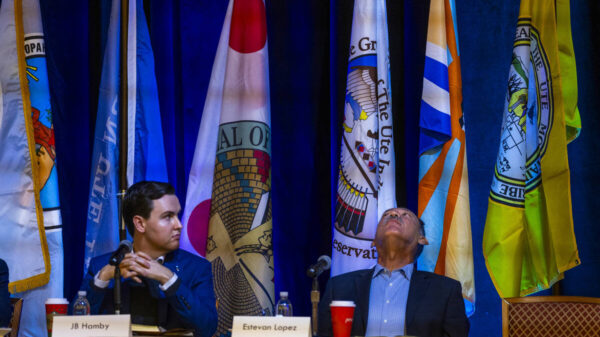
Time is running short as the states must reach an agreement by February 14, 2024, or risk federal intervention. Interior Secretary Doug Burgum has indicated he is prepared to step in if necessary. During the conference, New Mexico’s representative on the Upper Colorado River Commission, Estevan López, expressed the gravity of the situation, stating, “We feel it. Our water users feel that pain. It’s real.”
While Lower Basin states have agreed to take on the majority of the deficit, the Upper Basin states, including Colorado, Utah, New Mexico, and Wyoming, are resistant to making further cuts. This reluctance stems from existing state laws and the complex dynamics of water rights across the basin.
The urgency of the negotiations was evident during a panel discussion on the final day of the conference. John Entsminger, Nevada’s governor-appointed negotiator, criticized the other states for their failure to propose substantial conservation measures. He warned that without compromise, the talks would lead nowhere. “With the hydrology that we’re facing, I think the best possible outcome at this juncture is probably a five-year operating plan to keep us out of court,” he said, suggesting that a temporary agreement might be more realistic than a long-term solution.
Alarming Projections for Water Supply
Experts presented concerning forecasts for the Colorado River system. Carly Jerla, senior water resource program manager at the Bureau of Reclamation, indicated that flows into Lake Powell are projected to be between 44 percent and 73 percent of average this coming year. Since 2006, the replenishment of the reservoir has declined by approximately 15 percent due to reduced snowpack and increased evaporation rates.
Jack Schmidt, director of the Center for Colorado River Studies at Utah State University, echoed these concerns, noting that if the Rocky Mountains do not receive significant snowfall this winter, water managers could exhaust a critical buffer that allows for the release of water from Lake Powell into Lake Mead. “There’s a whole bunch of activities, including environmental compliance in the Grand Canyon, that get very difficult to meet, and we’re very close to that,” Schmidt warned.
As the conference concluded, the outlook for the Colorado River remained grim. The combination of climate challenges and the complexities of interstate negotiations will demand swift and effective action. The coming weeks will be crucial as states grapple with the reality of their water needs and the imperative to find common ground before the looming deadline.