








































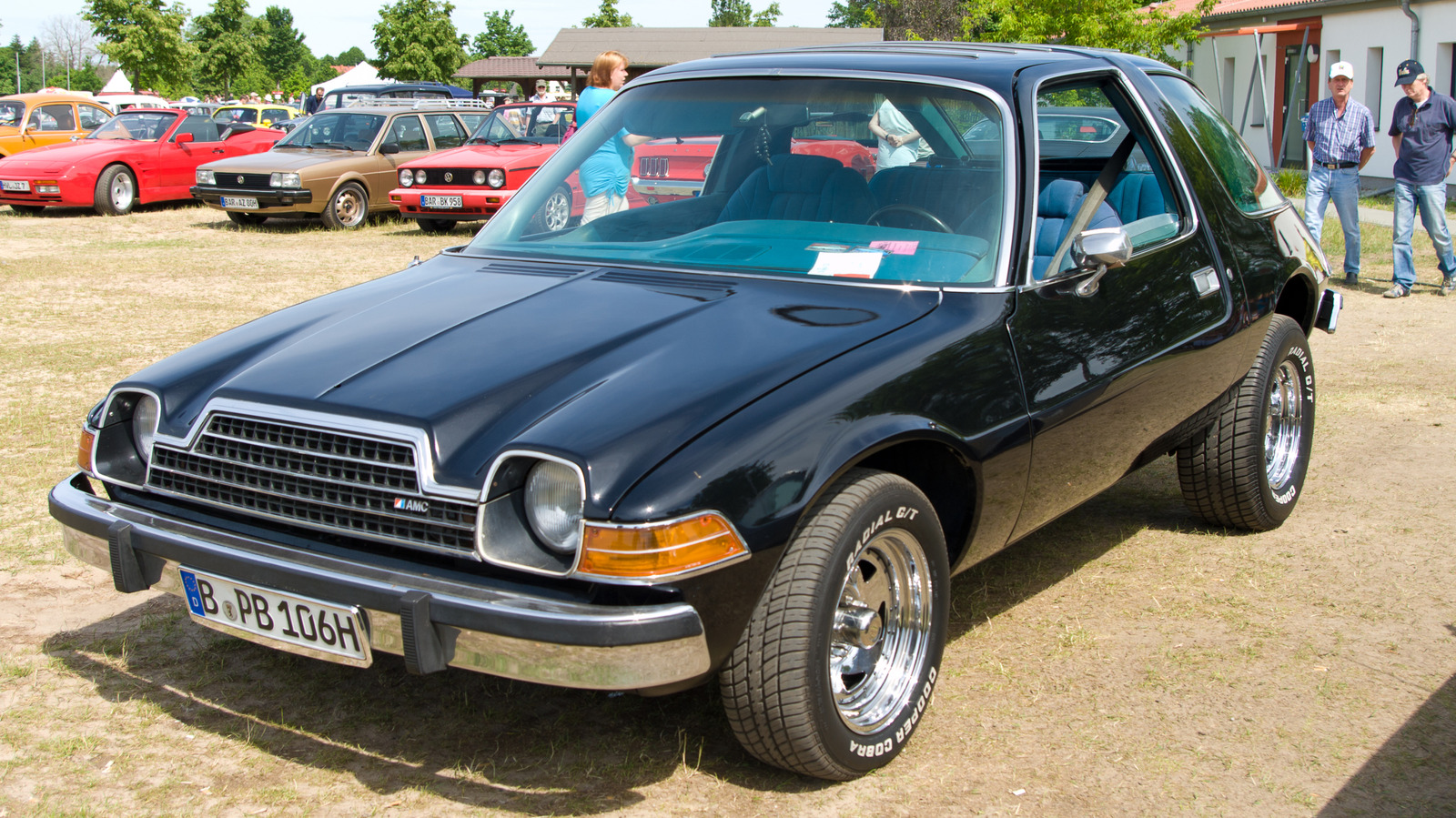
UPDATE: A newly released list highlights the five worst-looking cars from the 1980s, igniting a wave of nostalgia—and horror—among automotive enthusiasts. This ranking, which has surfaced just in time for car show season, examines iconic models that left drivers questioning their choices.
Among the top contenders is the notorious 1980 AMC Pacer, dubbed “the fishbowl” for its quirky design. Originally produced from 1975 to 1980, the Pacer was intended to feature a rotary engine. However, due to fuel economy and emissions challenges, AMC resorted to a standard inline-six engine. Sales peaked in 1976 with over 117,000 units sold, but dwindled to around 2,000 by its final production year. Car enthusiasts are still baffled by the Pacer’s peculiar aesthetic and fading popularity.
Another entry is the 1980 MGB, which faced a design overhaul due to new U.S. regulations. Critics lamented the shift from chrome to black rubber bumpers, which significantly altered its appearance. The MGB, once a symbol of British sports cars since 1962, saw its value plummet as it struggled with poor handling and outdated technology. Car and Driver’s
“It acted like a septuagenarian running a decathlon”
encapsulated the vehicle’s inability to compete, leading to its discontinuation in 1980.
The 1980 Lincoln Versailles also made the list, as Ford’s attempt to rival Cadillac’s Seville fell flat. Despite being marketed as a luxury vehicle, the Versailles was merely a re-skinned Ford Granada, sharing its wheelbase and engine options. Priced at $11,500 when it debuted in 1977, the Versailles never met sales expectations, with just 4,784 units sold in its final year, starkly contrasting with the Seville’s production numbers.
Next, the Dodge Rampage emerged as a curious variant of the Dodge Omni, described by Motor Trend as “homely” and “dopey.” This car-pickup hybrid lasted only three years on the market, from 1982 to 1984, with a total of 37,401 units sold. Despite its quirky charm, the Rampage struggled to find a loyal customer base, highlighting the challenges of unconventional designs.
Finally, the Ford EXP is remembered for its awkward styling and inability to live up to performance expectations. This two-seater, which debuted in 1982, was intended to attract entry-level buyers but ultimately failed to resonate. Although an upgraded EXP Turbo was introduced in 1984, it couldn’t save the model from its lackluster sales.
These vehicles serve as a reminder of the 1980s automotive missteps, sparking both amusement and disbelief among collectors and car fans alike. As automotive design continues to evolve, these models remain a testament to the era’s experimental spirit.
Stay tuned for more updates on automotive trends and nostalgic throwbacks!
























