








































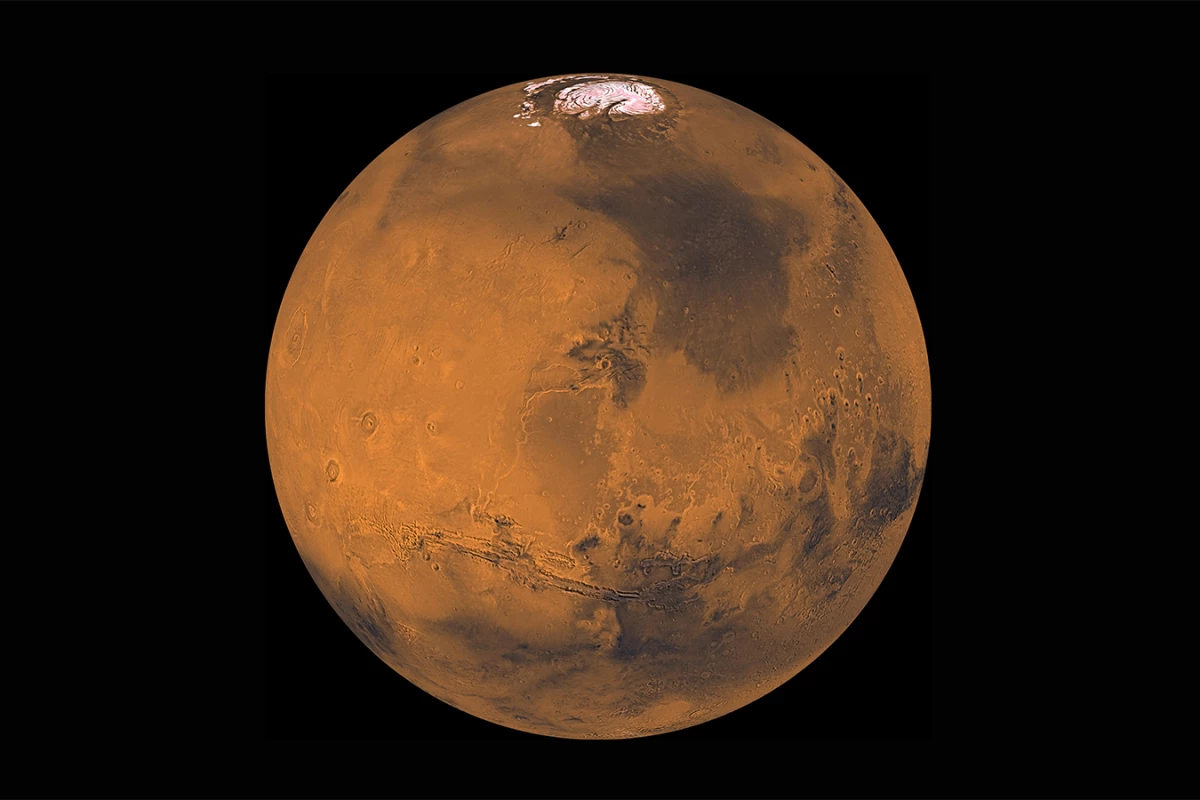
Research conducted by scientists at the National Institute of Standards and Technology (NIST) indicates that humans would age faster on Mars compared to Earth, a phenomenon explained by Albert Einstein’s Theory of Relativity. While the difference is relatively small—approximately 477 microseconds per day—it accumulates over time, presenting significant implications for future space missions and potential human colonies on the Red Planet.
Understanding this time dilation effect requires a basic grasp of relativity. Einstein’s theory posits that time is affected by both speed and gravity. For instance, when Neil Ashby and his colleague Bijunath Patla calculated the effects on Mars, they discovered that the planet’s distance from the Sun, its elliptical orbit, and its own gravitational pull all complicate the calculations.
The Complexities of Time on Mars
Time dilation is not merely a theoretical concept; it has practical applications. For example, GPS satellites orbiting Earth experience time differently than clocks on the ground due to their high speeds and reduced gravitational effects. Ashby noted that when these satellites travel at approximately 28,000 km/h, time runs faster by around 7 microseconds per day. This discrepancy must be corrected to ensure accurate positioning data.
On Mars, the situation is more intricate. The calculations need to consider not just the gravitational influences from Earth and the Sun, but also those from Mars itself. The planet’s eccentric orbit means its speed around the Sun varies throughout the year, complicating the time calculations further. Ashby explained, “It’s good to know for the first time what is happening on Mars timewise. Nobody knew that before.”
Implications for Future Missions
The findings, published in The Astronomical Journal, suggest that without proper adjustments, navigational errors for missions to Mars could reach up to 143 km per day. This presents a significant challenge, particularly as humanity increases its presence in space. As missions to Mars become more frequent and ambitious, the research highlights the need for dynamic systems to correct for time discrepancies.
With plans for human colonies on Mars, understanding how time operates on the planet becomes critical. The data gathered by Ashby and Patla indicates that Mars experiences time approximately 477 microseconds faster than Earth, with fluctuations of up to 266 microseconds throughout the year. This variability presents challenges not only for timekeeping but also for communications systems that will transmit data across vast distances.
As the exploration of Mars progresses, scientists will need to address these time-related challenges to ensure the success of future missions. The research underscores the importance of accurately understanding how time operates in different gravitational fields and speeds, which could have far-reaching implications for space travel and human life on other planets.
In conclusion, the impact of relativity on time perception in space is a fascinating area of study that continues to reveal new complexities as humanity prepares for life beyond Earth.
























