








































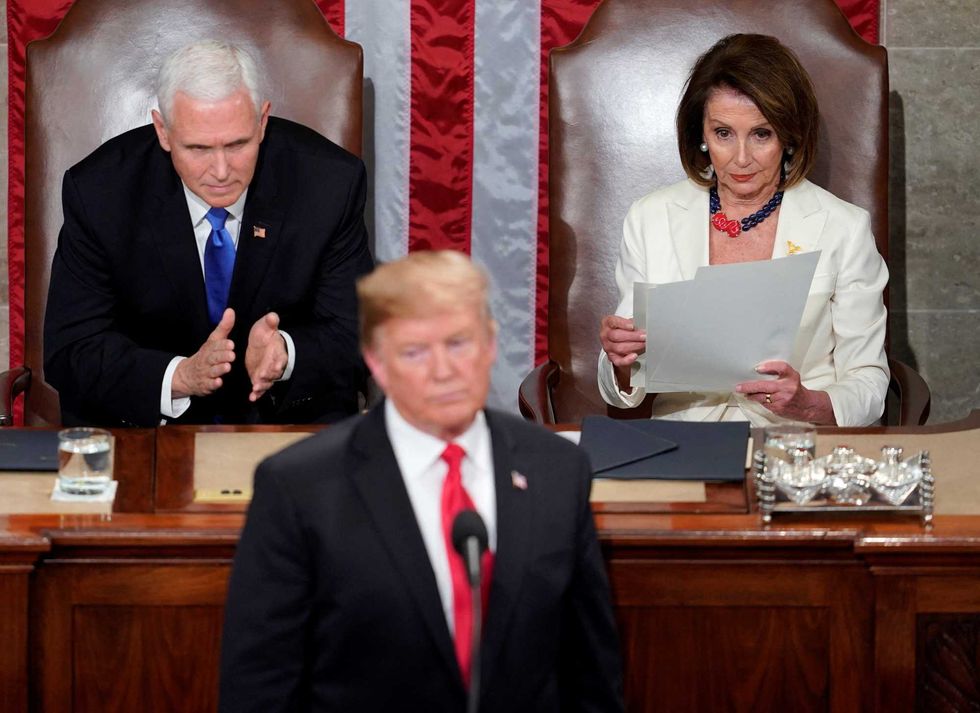
The role of the Speaker of the House in the United States has undergone significant transformation, particularly under the leadership of Mike Johnson, a Republican from Louisiana. This shift reflects a move away from the nonpartisan ideals set forth by the framers of the U.S. Constitution in 1787, as the Speaker’s position has increasingly aligned with the political ambitions of Donald Trump and the Republican Party.
Historically, the framers emphasized the importance of a legislative branch capable of addressing the diverse needs of the young nation. Article I of the Constitution outlines the responsibilities of Congress, which include levying taxes, declaring war, and impeaching officials. In contrast, Articles II and III, which address the powers of the President and the Supreme Court, are much more concise. This foundational structure intended for Congress to be the primary policymaking body, with the Speaker of the House serving as a neutral facilitator. However, this vision has evolved considerably over the years.
Evolution of the Speaker’s Role
The evolution of the Speaker’s position began early in American history. Henry Clay, who first held the position in 1810, leveraged his authority to influence legislation, notably advocating for U.S. involvement in the War of 1812. Subsequent speakers, including Thomas Reed and David Henderson, expanded the role further, enabling their parties to dominate the legislative process. By the 20th century, speakers like Joseph Cannon and Newt Gingrich refined the position into a powerful partisan role capable of controlling legislative agendas and party cohesion.
Gingrich, who became Speaker in 1995, centralized power within the office by expanding staff resources and limiting the influence of policy caucuses. This shift marked a departure from the Speaker as a facilitator toward a more assertive party leader, a trend that has continued into the present.
The centralization of power within the Speaker’s office has been both a response to the complexities of governance and a catalyst for increased party control. With 435 members in the House, effective leadership is crucial to navigating legislative challenges. As the nation has grown in population and government functions, the responsibilities of the Speaker have expanded, requiring a more hands-on approach to managing legislative activities.
The Current Landscape
Presently, Mike Johnson faces substantial challenges in balancing the demands of his party while upholding the legislative responsibilities outlined in Article I. His recent decision to keep Congress out of session for eight weeks during a government shutdown has drawn criticism, as it curtailed essential oversight and delayed critical appropriations. This absence from legislative duties reflects a troubling trend where party loyalty often supersedes congressional responsibilities.
The consequences of such decisions are far-reaching. Without active oversight, the power of the legislative branch diminishes, allowing executive decisions to go unchecked. This shift has significant implications for policy-making and the balance of power among branches of government.
Leadership transitions have historically impacted Congress’s ability to function effectively. John Boehner resigned from his position in 2015, partly due to internal party conflicts following bipartisan efforts to resolve a government shutdown. Similarly, Kevin McCarthy was ousted in 2023 after collaborating with Democrats, highlighting the tension between party loyalty and legislative duty.
As Johnson navigates his role, the challenge remains: how to address pressing national issues while managing a party that often looks to external influences, particularly from Trump. The current political climate has created a scenario where the Speaker must negotiate party interests with the need to uphold the legislative authority granted by the Constitution.
In summary, the role of the Speaker of the House has evolved from a nonpartisan facilitator to a powerful party leader, significantly influenced by the dynamics of modern American politics. As Mike Johnson steps into this complex landscape, the future of Congressional power and the balance of governance hangs in the balance, underscoring the need for a Speaker who can restore the original intent of the framers while addressing contemporary challenges.
























