








































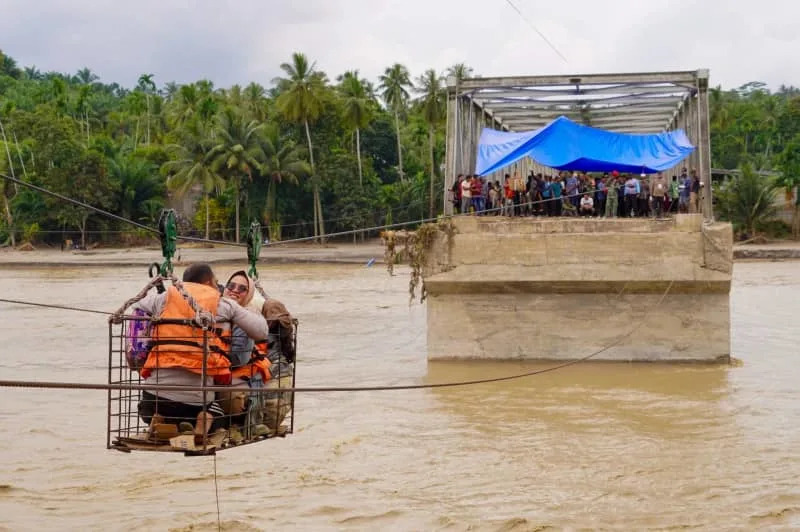
The death toll from devastating floods and landslides on the island of Sumatra has risen to at least 883, with more than 500 individuals still unaccounted for, according to Indonesia’s National Disaster Management Agency (BNPB). The agency reported these figures on March 9, 2024, following days of relentless rainfall that caused rivers to overflow and triggered landslides across multiple provinces.
The affected regions include Aceh, North Sumatra, and West Sumatra. The agency confirmed that Aceh province recorded the most fatalities, with 345 deaths and 174 individuals listed as missing. In North Sumatra, there have been 312 confirmed deaths and 133 missing, while West Sumatra has reported 226 fatalities and 213 unaccounted persons.
Rescue Efforts Complicated by Infrastructure Damage
The ongoing rescue operations face significant challenges due to extensive damage to transport infrastructure. Many areas are isolated, with dozens of bridges destroyed and roads blocked. As a result, some villages have been without electricity, clean water, or telecommunications for several days. The BNPB has indicated that the casualty figures could increase as rescue teams reach remote locations.
In addition to the confirmed deaths, approximately 4,200 people have sustained injuries. Many of the injured hail from rural districts characterized by steep terrain, which are particularly susceptible to landslides. Environmental organizations have attributed the severity of the disaster to rapid deforestation and development on hillsides in parts of Sumatra. They argue that weakened watersheds have heightened the vulnerability of local communities to heavy rainfall.
Government Response and Climate Change Concerns
In response to the crisis, the Indonesian government has deployed military personnel, police, and additional disaster-response teams to the affected areas. Experts warn that Indonesia frequently experiences floods and landslides during the monsoon season, but climate change is intensifying the frequency and severity of these weather events throughout the region.
The combination of natural disasters and human-induced environmental changes presents a growing challenge for Indonesia. As recovery efforts continue, the focus remains on supporting affected communities and addressing the underlying issues that contribute to such catastrophic events.
























