







































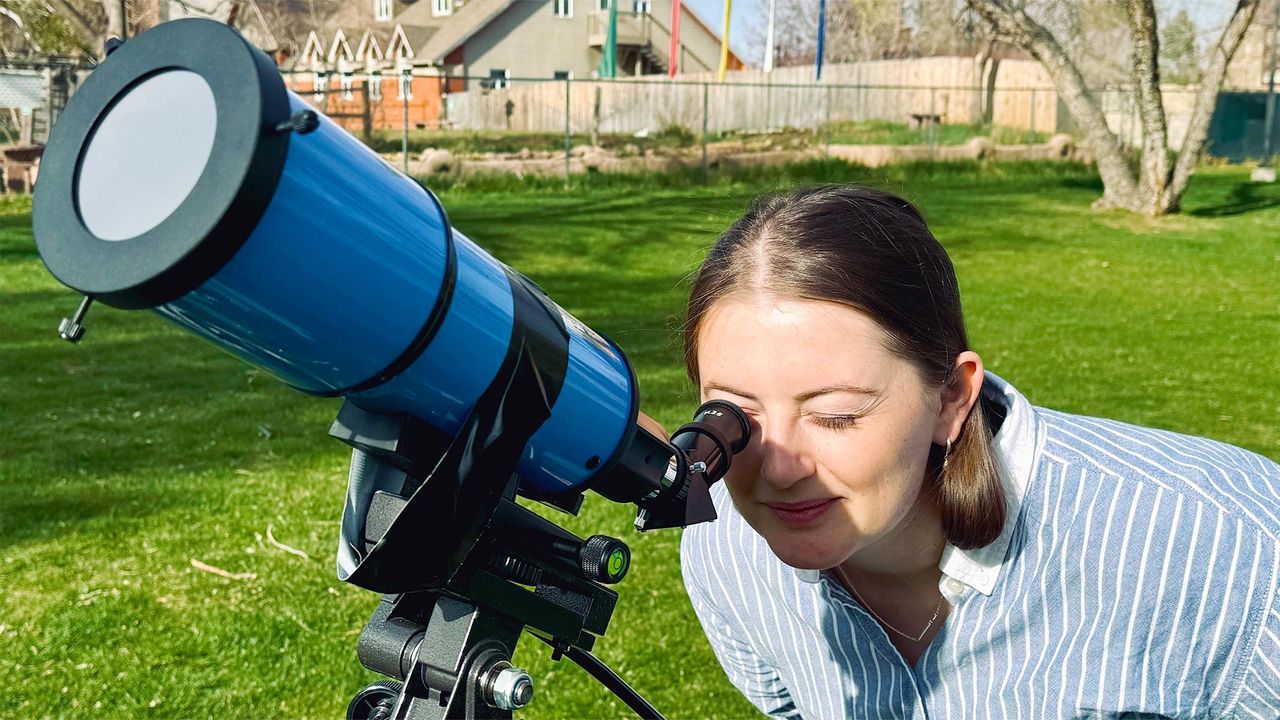
The iOptron 80mm White Light Solar Scope combines features suitable for both daytime solar and nighttime lunar observations. This telescope, equipped with a detachable solar filter from Thousand Oaks, is designed for beginners seeking a versatile option without the need for separate equipment. While it may attract those new to astronomy, experienced users with larger telescopes might find it less appealing.
Design and Features of the iOptron 80mm
The iOptron 80mm telescope boasts a sleek, lightweight design, making it easy to transport. Its bright blue aluminum body houses a refractor optical design with a main aperture of 3.1 inches (80mm). When the solar filter is attached, the usable aperture is reduced to 2.4 inches (60mm). This reduction allows for safe solar observation, as confirmed by the reputable Thousand Oaks, a well-known manufacturer of solar filters.
Included in the package are two eyepieces: a 25mm (16x magnification) and a 9mm (44x magnification). The telescope also features a rack-and-pinion focuser with a 1.25-inch (32mm) eyepiece slot. While the absence of a finder scope might pose challenges for beginners, the telescope comes with a 45-degree erect glass prism, facilitating easier viewing of high-altitude objects.
The solar filter attaches securely with three screws, ensuring safety during solar observations. This design consideration is crucial for novice astronomers who may be unfamiliar with solar viewing protocols.
Performance and Usability
During testing on a clear, cloudless day, the iOptron 80mm White Light Solar Scope delivered soft, golden-orange views of the sun, making sunspots easily visible. The telescope performed adequately for its size, allowing users to observe sunspot regions, with details discernible even through the 25mm eyepiece. Observers should note that visibility of sunspots can vary based on atmospheric conditions and solar activity.
A notable drawback is the plastic focusing knob, which some users may find stiff and less reliable. This issue can lead to slight wobbling, requiring readjustment during observations.
User reviews from platforms such as High Point Scientific highlight mixed experiences, particularly concerning the focusing mechanism. One review noted, “A good basic refractor telescope… However, cheap plastic focusing housing causes image shift making astrophotography difficult.” Another stated, “When you turn the knob to focus, the object moves from side to side… sometimes it can move completely out of view.”
Despite these criticisms, the iOptron 80mm remains a practical choice for those seeking an entry-level telescope for both solar and nighttime viewing.
For beginners, the telescope is lightweight and easy to set up, quickly mounting onto a tripod. The solar filter is straightforward to attach, reminding users to prioritize safety when observing the sun.
Is the iOptron 80mm Right for You?
The iOptron 80mm White Light Solar Scope is an excellent option for newcomers to astronomy who desire a dual-purpose telescope. With its reasonable price point and ease of use, it offers a viable entry into both solar and lunar viewing.
However, for those who already possess a basic nighttime telescope, purchasing a dedicated solar filter might be a more cost-effective solution. Thousand Oaks manufactures filters compatible with various telescope sizes, allowing users to utilize their existing equipment.
Alternatively, if the iOptron 80mm does not meet your needs, consider options like the Celestron EclipSmart Travel Solar Scope 50 or the PowerSeeker 60AZ refractor telescope. These alternatives provide similar functionalities with additional features like a tripod and finder scope, albeit with smaller apertures.
For those interested in more advanced solar observation, H-alpha telescopes, while more expensive, offer enhanced views of solar phenomena, including solar prominences. Trusted brands in this field include Lunt, which offers a range of aperture sizes.
In summary, the iOptron 80mm White Light Solar Scope serves as an entry-level telescope that successfully combines solar and lunar viewing capabilities. Its lightweight design and straightforward setup make it a suitable option for beginners venturing into the world of astronomy.