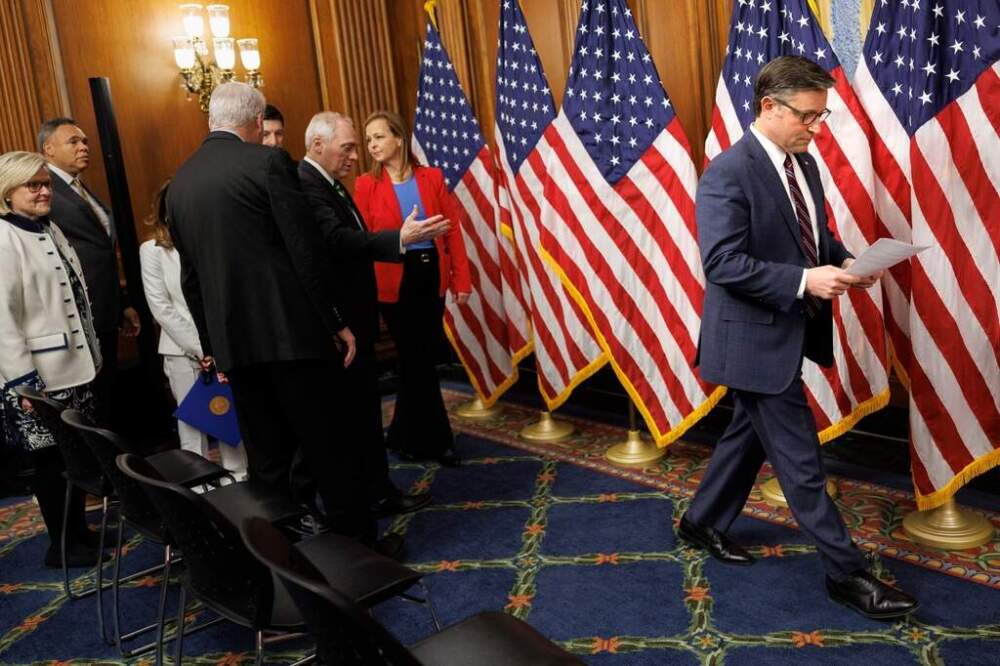
President Donald Trump is pushing Congress to pass the proposed SAVE Act, which would require potential voters to provide proof of citizenship. This initiative is part of a broader Republican strategy to nationalize voting regulations in the lead-up to the midterm elections. Trump has even suggested that the midterm elections could be postponed, raising significant concerns about the implications for democratic processes in the United States.
The proposed legislation has sparked debate among political analysts and election officials. Michael McNulty, Policy Director at the bipartisan think tank Issue One, emphasized the potential consequences of implementing such measures. “Requiring proof of citizenship could disenfranchise many eligible voters, particularly in marginalized communities,” he stated.
In support of the SAVE Act, Trump argues that it will enhance the integrity of the electoral process. Critics, however, warn that this requirement may disproportionately impact minority voters who may lack the necessary documentation. Justin Roebuck, Chief Election Officer for Ottawa County, Michigan, remarked on the administrative challenges such a law would pose. “Implementing these requirements would add layers of complexity to an already intricate process,” he noted.
The political landscape is becoming increasingly polarized as midterm elections approach on November 8, 2022. Scott Andrew McDonell, the elected County Clerk in Dane County, Wisconsin, expressed concerns about the potential fallout. “Election officials are already stretched thin; additional regulations could hinder our ability to conduct fair elections,” he explained.
As public discussions continue, the SAVE Act’s fate remains uncertain. Advocates for voting rights argue that the act undermines the core democratic principle of accessibility. With both parties gearing up for the midterms, the implications of this legislation will likely be a focal point in campaign strategies.
The urgency of these developments is compounded by the growing sentiment among some Republican leaders, including Trump, that the election integrity narrative should dominate the political discourse. Observers note that calls to nationalize voting may resonate with certain voter bases but could also alienate moderates and independents.
As the situation develops, election officials and policymakers are navigating a complex landscape where the balance between security and accessibility is at stake. The question remains whether the SAVE Act will find its way into law or if it will face significant opposition leading up to the elections.
The condensed version of this analysis is available at the top of this page and through various podcast platforms. A full, unedited broadcast provides an in-depth exploration of these issues. The transcription of the broadcast was initially generated by Descript, an AI transcription tool, and subsequently reviewed for accuracy before publication.