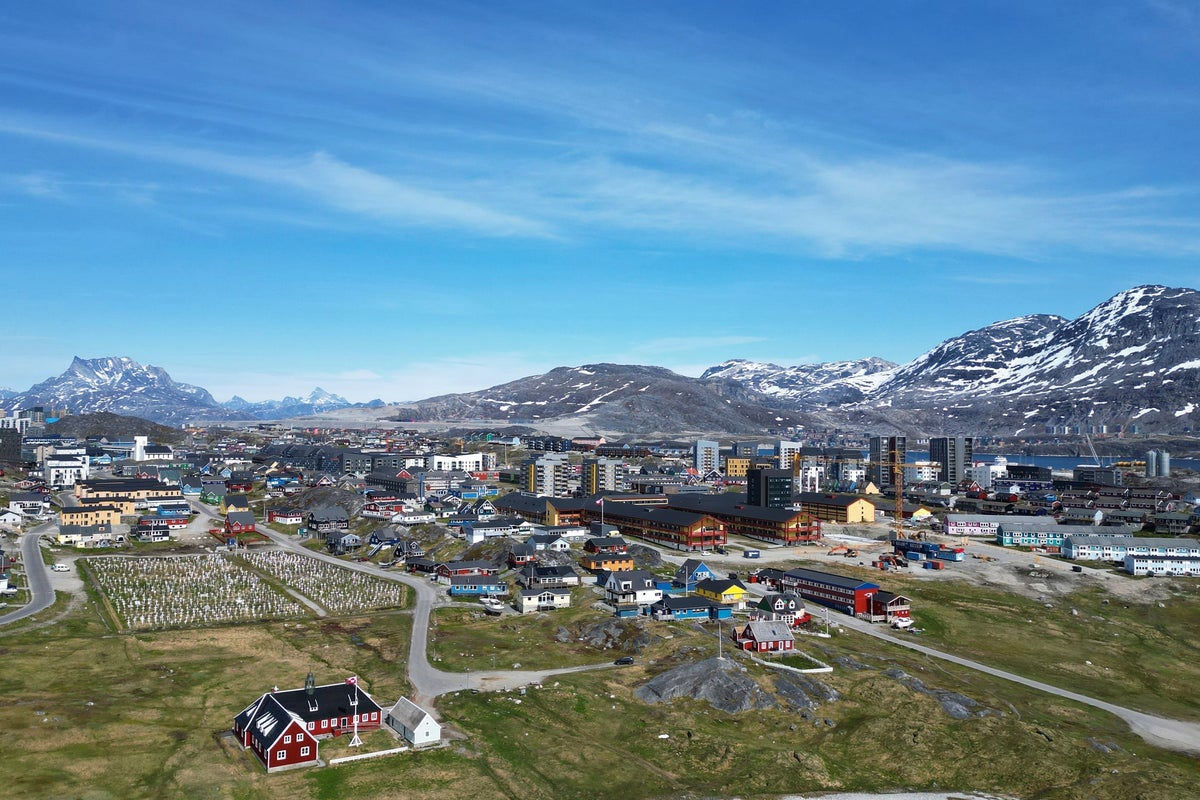
President Donald Trump has reiterated his position on the United States potentially taking control of Greenland, claiming the island is essential for national security. During a press conference in Florida on Monday, Trump asserted that the U.S. must secure Greenland to protect its interests, stating, “We need it for national protection.” This statement follows his appointment of Louisiana Governor Jeff Landry as a special envoy to the semi-autonomous Danish territory, a move that has angered local officials.
Trump’s comments included a contentious assertion regarding historical claims to Greenland. He remarked, “They say that Denmark was there 300 years ago or something with a boat. Well, we were there with boats too, I’m sure. So we’ll have to work it all out.” This statement overlooks the longstanding presence of the Inuit people in Greenland and the early European contact dating back to the late 10th century. The U.S. did not significantly engage in exploration in the area until the late 19th century.
Despite Trump’s claims, Denmark has consistently supported Greenland’s development, recently pledging a multi-year investment package totaling $253 million. In response to Trump’s renewed interest, Danish Prime Minister Mette Frederiksen and Greenland’s leader, Jens-Frederik Nielsen, issued a joint statement emphasizing that “national borders and the sovereignty of states are rooted in international law.” They firmly stated that annexation is not permissible, even under the pretext of national security.
The announcement of Landry’s appointment marks a significant shift in U.S. relations with Greenland, reviving discussions that had seemingly quieted since October 2023. At that time, Frederiksen expressed a sense of relief regarding U.S. interests in Greenland, noting, “Right now it seems far away. There is perhaps a feeling that we can breathe a sigh of relief.” The current focus on Greenland, however, raises concerns among Danish officials.
The Trump administration’s previous interest in Greenland reached a peak early in his presidency, including a controversial suggestion that military force could be considered in the acquisition of the island. In March, Vice President JD Vance visited a U.S. military base in Greenland, coinciding with reports of increased U.S. intelligence operations in the area. Those developments compelled Denmark to summon the U.S. ambassador to clarify the situation.
As tensions evolve, the implications of Trump’s ongoing claims about Greenland continue to attract scrutiny. The administration’s approach raises questions about future relations between the U.S., Denmark, and Greenland, particularly in light of the current geopolitical landscape, which includes rising concerns over Russia and China‘s influence in the Arctic region.