





































In a historic move for Chicago’s educational landscape, the city’s first public school named in honor of a Black individual was established in 1936. Dubbed DuSable High School, it was created to serve an exclusively Black student population and bears the name of Jean Baptiste Point du Sable, recognized as the city’s first nonindigenous settler. This development marked a significant shift in a system predominantly characterized by schools named after white figures.
Throughout Chicago, numerous public schools now celebrate the legacies of influential Black individuals, including Harold Washington Elementary School, named after the city’s first Black mayor, and Walter H. Dyett High School for the Arts, named after a renowned violinist and music educator. However, these namesakes are a more recent addition to a city whose older schools, like George Washington High School and Edgar Allan Poe Classical School, predominantly honor white men.
The establishment of DuSable High School was a response to the changing demographics brought on by the Great Migration, which saw many Black families relocate to Chicago. According to articles from the **Chicago Defender**, DuSable was built to alleviate overcrowding at Wendell Phillips High School, which had shifted from serving predominantly white students to a majority Black population by the late 1910s.
Advocacy and Controversy Surrounding DuSable High School
The push for DuSable High School was fueled by the advocacy of the National De Saible Memorial Society, led by educator Annie Oliver. Todd-Breland, an associate professor of history at the University of Illinois at Chicago, noted that there was a growing recognition of DuSable’s importance as an African figure in Chicago’s history during the 20th century. The society campaigned for a replica of DuSable’s cabin to be featured at the 1933 World’s Fair, highlighting the need for Black representation, which had been sorely lacking since the Columbian Exposition in 1893.
The naming of the school itself was met with resistance from some white residents and a segment of the Black community that sought to retain the Wendell Phillips name. The original Wendell Phillips High School had become a source of pride, embodying the legacy of Black achievement and community spirit. Nonetheless, advocates for DuSable argued that naming the school after an important figure in Black history was essential for the identity of the new institution.
A June 1936 article in the **New Journal and Guide** reported on the controversies surrounding the name change, with some detractors claiming that DuSable was not a Black man but a Frenchman. Such assertions were challenged by those who sought to unravel the narrative that prioritized white settlers as the city’s first residents.
DuSable’s Impact on Black Education in Chicago
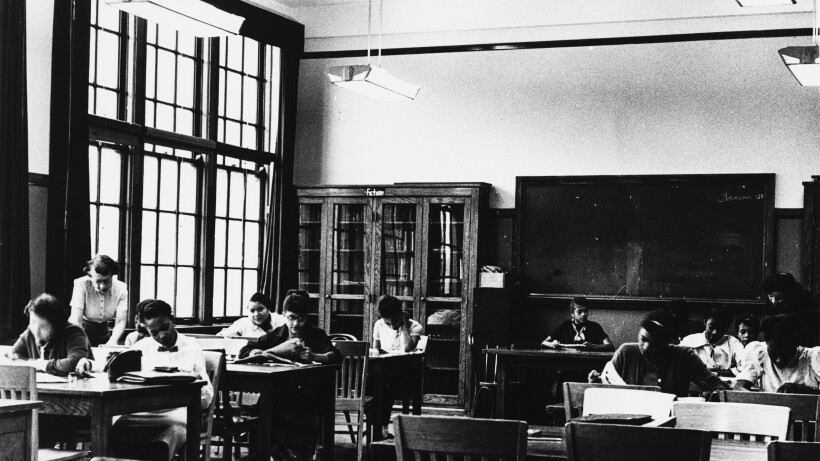
The construction of DuSable High School was made possible through funding from the New Deal Public Works Administration. Originally opened in 1935 as New Wendell Phillips, the building was repurposed as a high school due to the overwhelming demand for enrollment. The new institution was designed with modern amenities, including laboratories, a library, and spaces for music and the arts, reflecting the aspirations for educational equality during a time of segregation.
Todd-Breland highlighted the significance of DuSable High School as a symbol of pride for the Black community, noting that it was the first high school built specifically for Black students in Chicago. The establishment of such a facility represented a move toward educational equity, with Black advocates seeking not just desegregation but also equal funding and resources for their schools.
For decades, DuSable High School became known for its outstanding arts program and a student body that swelled to around 4,000 students. However, in the early 2000s, enrollment began to decline, partially due to the closure of a nearby public housing complex. The school was subsequently reorganized into three separate institutions and was designated as a Chicago landmark in 2013.
Today, the DuSable Alumni Coalition for Action remains active in preserving the school’s legacy, organizing events that honor notable alumni like Chief Justice P. Scott Neville Jr. of the Illinois Supreme Court. Their commitment to celebrating the past ensures that the influence of DuSable High School and its storied history will not be forgotten.
As schools across Chicago continue to recognize the contributions of Black leaders and educators, the legacy of Jean Baptiste Point du Sable and the establishment of DuSable High School serve as a testament to the ongoing quest for equality and representation in education. The institution stands as a beacon of pride within the Black community, highlighting the importance of acknowledging and honoring the city’s diverse history.