







































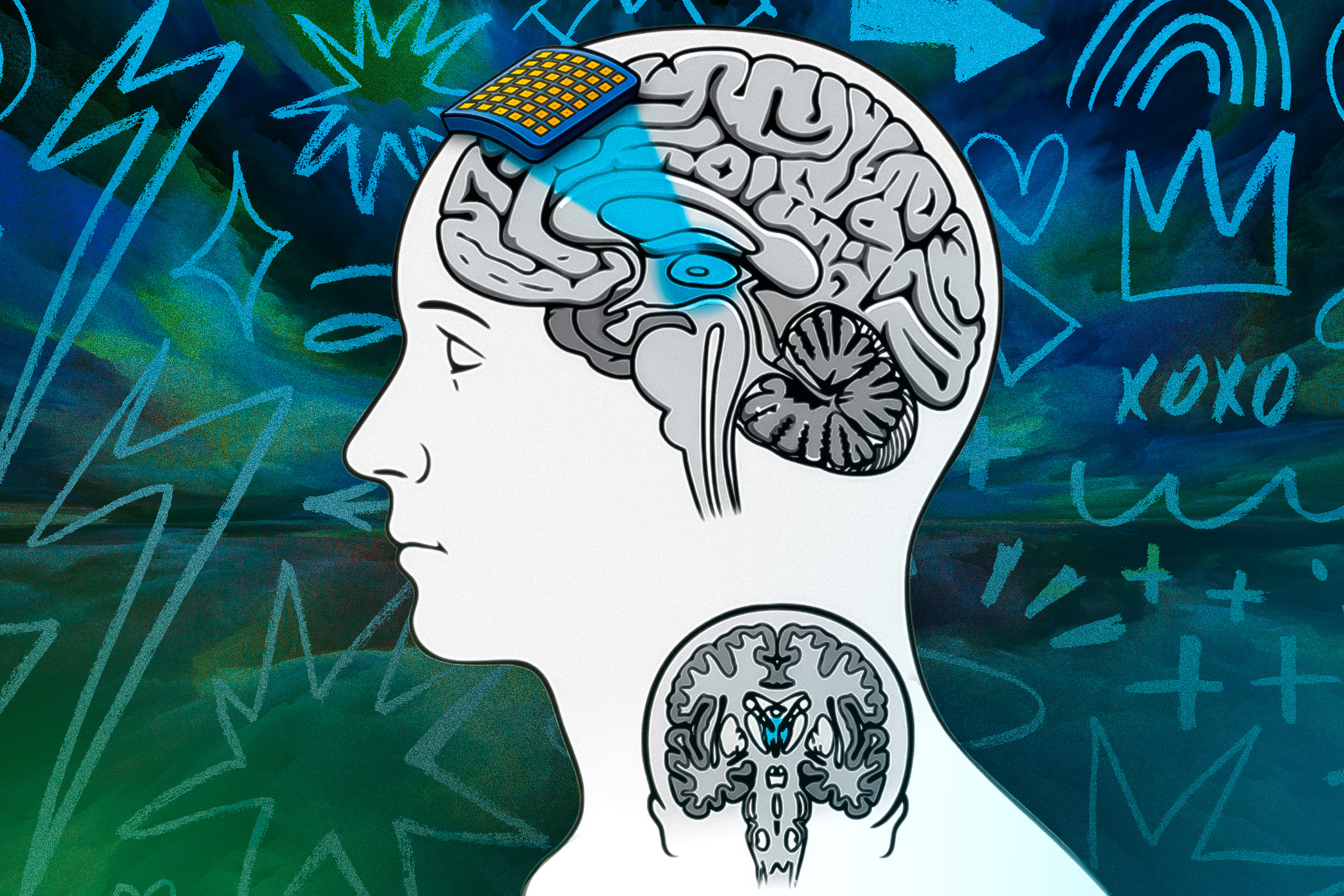
Research into consciousness, often referred to as a “hard problem” in science, may receive a significant boost from a new tool known as transcranial focused ultrasound. This innovative technology allows researchers to stimulate specific areas of the brain noninvasively, paving the way for deeper understanding of how brain activity translates into thoughts and sensations. Two researchers from the Massachusetts Institute of Technology (MIT), Daniel Freeman and Matthias Michel, have published a detailed paper outlining a roadmap for utilizing this tool to investigate consciousness.
Daniel Freeman, a technical staff member at MIT Lincoln Laboratory, explained, “Transcranial focused ultrasound will let you stimulate different parts of the brain in healthy subjects, in ways you just couldn’t before.” The technology, which has seen limited application in research until now, promises to enhance the exploration of neural circuits responsible for various experiences such as pain, vision, and complex thought processes.
Advancements in Brain Research
Unlike other brain stimulation techniques like transcranial magnetic or electrical stimulation, transcranial focused ultrasound offers greater resolution and depth of stimulation. It transmits acoustic waves through the skull, allowing precise targeting of brain areas within a few millimeters. This capability is crucial in conducting robust experiments aimed at identifying the underlying mechanisms of consciousness.
“There’s a lot of interesting emotional circuits that are deep in the brain, but until now you couldn’t manipulate them outside of the operating room,” Freeman noted. The ability to modulate brain activity could help researchers establish clearer cause-and-effect relationships. Current studies often measure brain activity in response to stimuli, but the exact nature of the relationship between this activity and the experience of consciousness remains uncertain.
By manipulating brain activity, researchers can discern whether observed neural responses are a product of consciousness or integral to its formation. As Matthias Michel stated, “Transcranial focused ultrasound gives us a solution to that problem.”
Exploring Consciousness and Its Mechanisms
The newly published paper, titled “Transcranial focused ultrasound for identifying the neural substrate of conscious perception,” appears in the journal Neuroscience and Biobehavioral Reviews. The authors, including Freeman, Michel, Brian Odegaard from the University of Florida, and Seung-Schik Yoo from Brigham and Women’s Hospital and Harvard Medical School, aim to address fundamental questions about consciousness.
The research outlines two primary perspectives on consciousness: the “cognitivist” view, which posits that conscious experience arises from higher-level mental processes, and the “non-cognitivist” perspective, suggesting that specific neural patterns can directly generate subjective experiences. By employing transcranial focused ultrasound, researchers can explore questions such as the role of the prefrontal cortex in perception and whether consciousness is generated locally or requires a network of brain regions.
Freeman emphasized the significance of this work, stating, “It’s a basic science question, how is pain generated in the brain?” The ability to manipulate brain activity using the new tool may shed light on the origins of pain perception and other sensory experiences.
The team plans to conduct experiments focusing initially on the visual cortex before exploring higher-level areas of the frontal cortex. These studies aim to build a comprehensive understanding of the neural processes involved in visual perception and the corresponding brain activity.
In addition to their research endeavors, Freeman and Michel are actively fostering interest in consciousness studies at MIT. They co-founded the MIT Consciousness Club, a cross-disciplinary initiative aimed at promoting academic exploration of consciousness. Supported by the MIT Human Insight Collaborative, the club aims to facilitate monthly events that delve into cutting-edge research.
As Michel concluded, “It’s a new tool, so we don’t really know to what extent it’s going to work. But I feel there’s low risk and high reward. Why wouldn’t you take this path?” The research for their paper received support from the U.S. Department of the Air Force, highlighting the potential implications of this groundbreaking work.
With the promise of transcranial focused ultrasound, the scientific community may be on the brink of significant breakthroughs in understanding the intricate workings of consciousness and the brain.