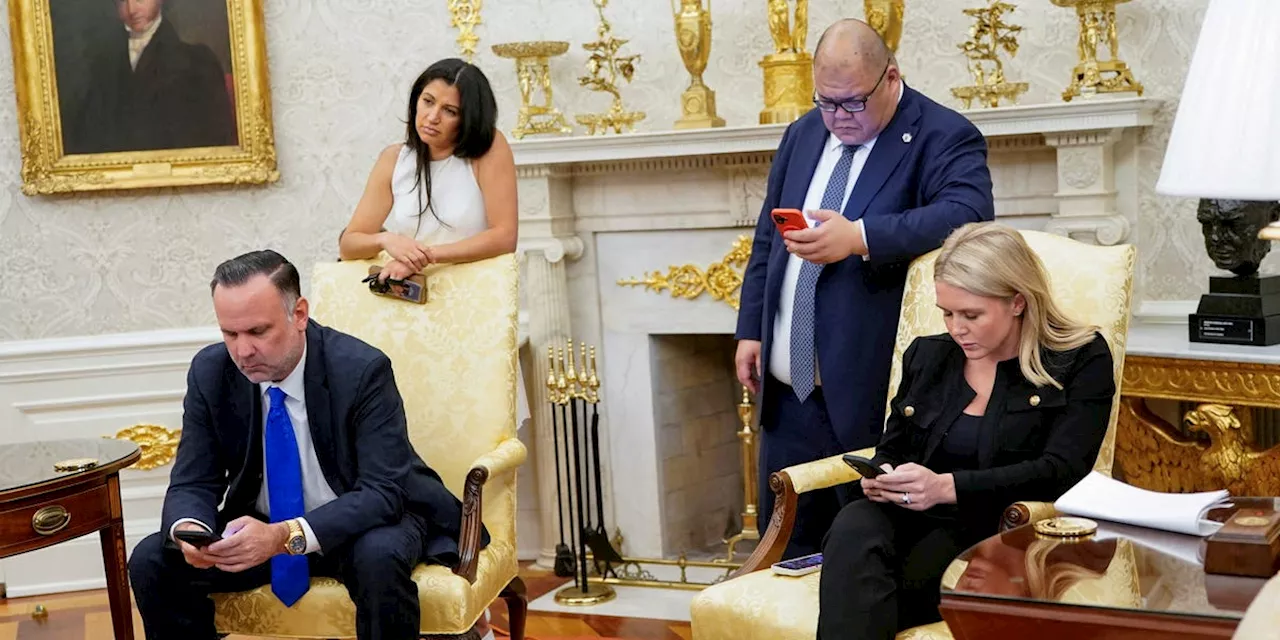
The White House has disclosed the salaries of its employees, revealing the financial compensation of key staff surrounding former President Donald Trump. This release, mandated by law, highlights the varying salaries among aides, advisors, and senior staff in the executive office, showcasing the contrast between government pay and private sector remuneration.
The president’s annual salary stands at $400,000. While this figure is substantially higher than the average American salary of $69,846 in 2024, it is still below what is required to enter the top 1% of earners in many regions. For example, in 2025, the top earners in Maryland and Virginia, states bordering the District of Columbia, are expected to make $677,543 and $701,792, respectively.
Despite serving the public, many White House employees earn significant salaries. The most highly compensated staff members include policy advisors and legal counsel, while entry-level positions such as research assistants and press assistants receive lower pay.
On July 1, the White House submitted the complete salary list to Congress, complying with legal obligations. Notably, some individuals listed have since departed from their roles. For instance, Taylor Budowich transitioned to the private sector, while Mike Waltz began serving as the U.S. Ambassador to the United Nations after leaving his position as National Security Advisor.
Others, including Marco Rubio and David Sacks, reported a salary of $0, having either declined compensation or received payment from other government branches.
While the White House did not issue a comment on the salary disclosures, this information provides insight into the financial landscape of federal employment and the contrasts with private sector earnings. The full list of the highest-paid employees highlights the complexities behind government salaries and the ongoing discussions about compensation in public service roles.
The release of this information not only sheds light on the financial aspects of working in the White House but also raises questions about the balance between public service and competitive compensation. As the debate continues, the examination of government salaries remains a relevant topic in discussions surrounding public policy and fiscal responsibility.