








































UPDATE: The Trump administration’s renewed push for a settlement in the ongoing war in Ukraine is causing significant alarm among European leaders. Just announced diplomatic engagements suggest a potential shift toward conceding to Russian demands, prompting fears that President Trump is preparing an ultimatum for Kyiv.
European governments are on high alert as recent moves indicate that Trump and his team may have accepted Russia’s rationale for the conflict, which began in February 2022. This war has escalated into the bloodiest conflict in Europe since World War II, with devastating implications for Ukraine’s sovereignty and democratic integrity.
The latest developments come as the Trump administration published a National Security Strategy document this past Friday, asserting that Europe harbors “unrealistic expectations” regarding the war’s outcome. The document notably suggests that NATO should not be viewed as an expanding alliance, echoing long-standing Russian arguments that justify its military actions in Ukraine.
Polling data reveals that Americans overwhelmingly oppose Trump’s current approach, with a 2-to-1 margin against coercing Ukraine into surrendering territory. A Gallup poll further shows that even among Republicans, disapproval of Trump’s Ukraine policy is at an all-time high.
Despite this, key advisors like Steve Witkoff and Jared Kushner are reportedly advancing plans that would require Ukraine to concede land in exchange for vague assurances about safeguarding the rest of its territory. These discussions have seen Witkoff shuttle between Moscow and Florida, hosting Ukrainian diplomats to negotiate a peace framework based on a 28-point document drafted with Russian input.
“There is a possibility that the U.S. will betray Ukraine on the issue of territory without clarity on security guarantees,” warned Emmanuel Macron, President of France, during a call among European leaders.
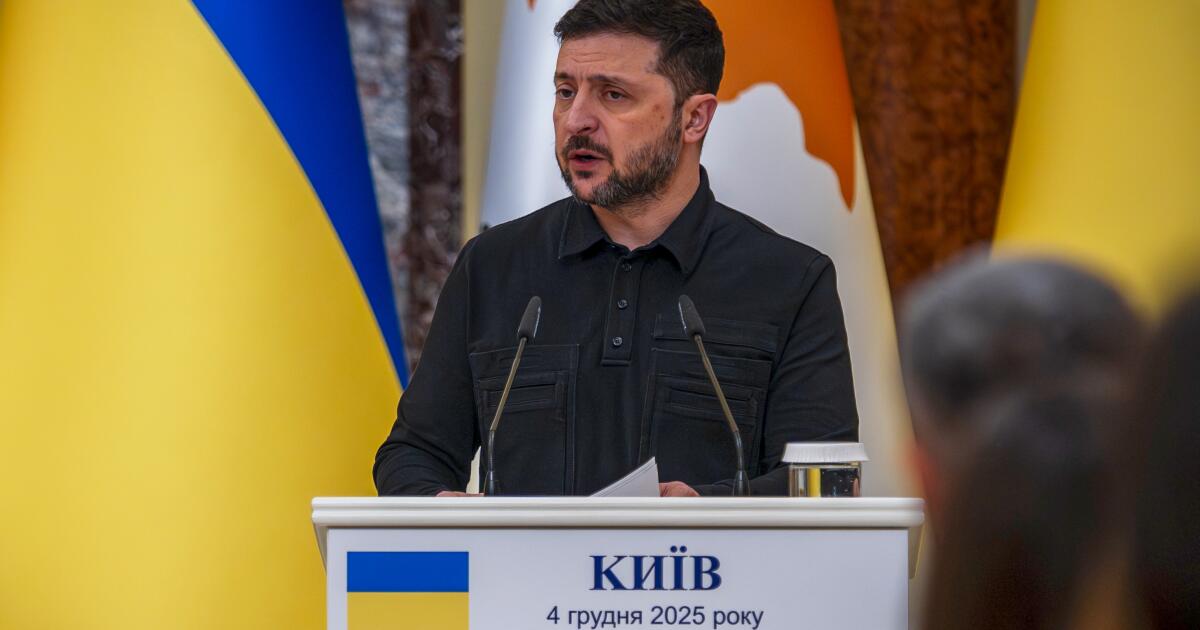
The sentiment of betrayal echoes through Europe, with Friedrich Merz, the Chancellor of Germany, criticizing the U.S. for “playing games” with both Ukraine and its European allies. Ukrainian President Volodymyr Zelensky has firmly insisted that territorial integrity and solid security guarantees must be the foundation of any peace agreement.
Experts are raising concerns that if Trump grows impatient with Ukraine’s resistance, it could severely jeopardize its military efforts. “The U.S. still provides crucial intelligence and weapon sales to European countries that support Ukraine,” noted Brian Taylor, director of the Moynihan Institute of Global Affairs. However, a radical policy shift where the U.S. halts weapon transactions could force Europe to ramp up its own defense production.
As European leaders, including the British Prime Minister Kier Starmer, urge Trump to maintain steadfast support for Ukraine, a heated debate is emerging over the future of $220 billion in Russian assets currently frozen in European banks. Some leaders advocate for utilizing these assets to assist Ukraine, while others suggest holding them as leverage in future negotiations.
“If the Trump administration and European leaders coordinate effectively, they can apply real pressure on a Russian military that is already under strain,” stated Kyle Balzer from the American Enterprise Institute. “Russia’s economy is faltering due to falling energy prices and mounting military losses.”
In a stark assessment, Trump revealed that approximately 7,000 Russian soldiers are dying each week in this conflict, a staggering figure reflective of the war’s brutality. “Such pressure will only have a decisive impact if the Trump administration stops giving Putin hope for favorable agreements,” Balzer concluded.
As this situation continues to evolve, all eyes are on the Trump administration and its next moves regarding Ukraine. European leaders remain hopeful for a united front against Russian aggression, urging that the sacrifices made thus far must not be in vain.
























