
























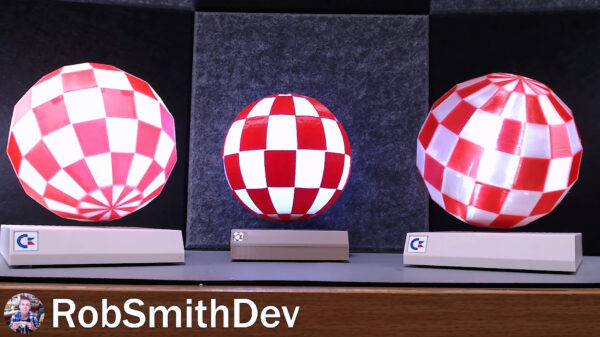















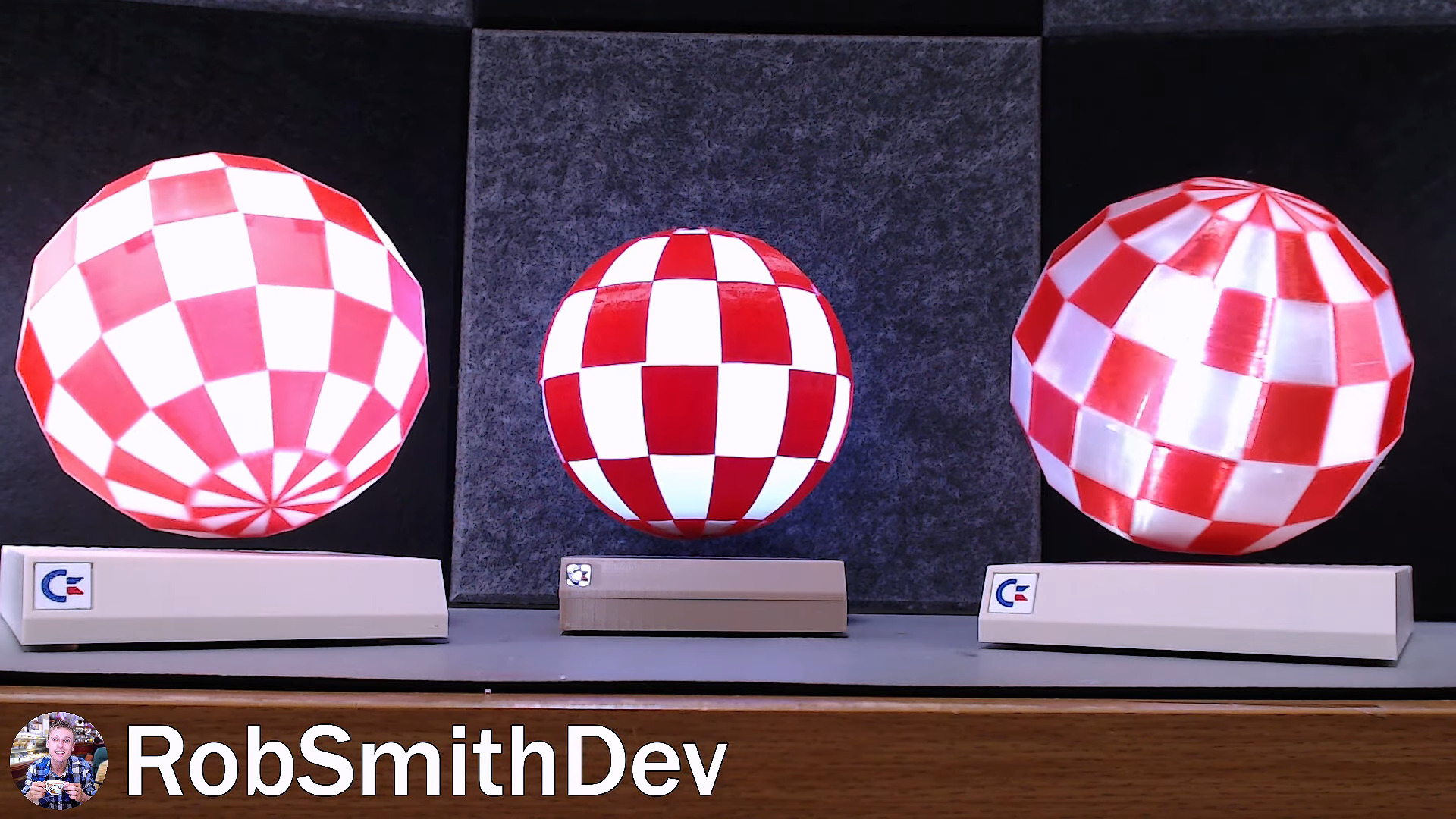
A new commemorative lamp celebrating the 40th anniversary of the Amiga computer features a unique levitating design that adds a playful twist to the nostalgic theme. Created by innovator Rob Smith, this lamp incorporates a spinning element that pays homage to the iconic “boing” ball from the classic Amiga demo, which originally captured the imagination of many during the computer’s heyday.
While traditional magnetic levitation lamps have become commonplace, Smith sought to introduce a novel approach by enabling the levitating ball to rotate at an angle, reminiscent of its appearance in the famous demo. The design involves a clever modification where the levitating mechanism remains functional, but instead of directly mounting the ball to the magnet, it is affixed to a plinth resembling a Dalek. This plinth conceals a small motor that is positioned at an angle, allowing for the desired rotation while keeping the base vertical.
The motor’s operation is powered by the same coil intended for the LED lights, which have been repurposed from the original kit. Interestingly, Smith discovered that the inductor alone did not provide sufficient power for the motor. To resolve this, he incorporated a capacitor to tune the LC circuit to approximately 100 kHz, enabling the motor to function effectively. This unexpected requirement for tuning added an intriguing layer to the project, showcasing Smith’s innovative approach.
The lamp’s base, inspired by the design of an old hard drive, features self-tapping screws instead of traditional insets, contributing to its distinct aesthetic. The resulting product not only serves as a functional lamp but also stands as a delightful tribute to the legacy of the Amiga computer, which continues to resonate with enthusiasts four decades after its launch.
The mesmerizing effect of magnetic levitation has captivated audiences, and this new design by Rob Smith exemplifies how technology can be combined with creativity to evoke nostalgia and wonder. For those who prefer a simpler approach, the concept of tensegrity offers an alternative way to create the illusion of levitation without magnets.
As technology evolves, projects like this remind us of the enduring impact of early computing and the innovative spirit that continues to push boundaries in design and functionality.