







































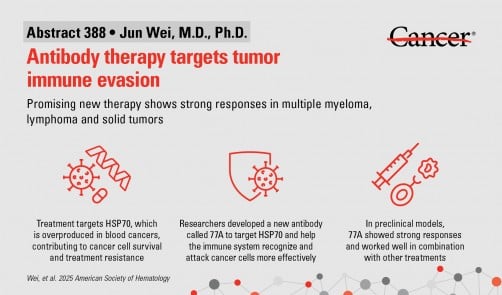
Research from The University of Texas MD Anderson Cancer Center has unveiled a promising new antibody therapy, known as 77A, which has demonstrated the ability to enhance immune responses against various blood cancers and solid tumors. This breakthrough was presented by Jun Wei, M.D., Ph.D., during the 67th American Society of Hematology (ASH) Annual Meeting held on December 6, 2025. The study suggests that 77A may help overcome resistance to existing cancer treatments.
The new investigational therapy targets HSP70, a heat shock protein that is often overproduced in certain cancers, allowing tumors to evade immune detection. By converting HSP70 into an immune system trigger, 77A is able to activate T cells and natural killer (NK) cells, reshaping the tumor environment and fostering sustained immune responses. The findings indicate that 77A significantly enhances the effects of chemotherapy, radiation therapy, and other immunotherapies across multiple tumor types.
Mechanism and Efficacy of 77A
The action of 77A is particularly noteworthy due to its ability to boost the performance of both innate and adaptive immune cells, including NK cells and T cells. In laboratory models, the antibody improved the immune system’s capacity to identify and eliminate cancer cells effectively. Furthermore, 77A showed promising results when used in conjunction with existing treatments, such as chemotherapy, radiation therapy, and immune checkpoint inhibitors. The potential for pairing with adoptive T cell therapy, which involves administering lab-grown immune cells to patients, further underscores its versatility.
The initial tests with human immune cells indicated that 77A could also enhance immune responses in healthy donors. These findings are crucial as they lay the groundwork for future clinical trials, which aim to explore the antibody’s efficacy in human patients suffering from various forms of cancer.
Future Steps and Clinical Trials
The research team, led by Robert Z. Orlowski, M.D., Ph.D., expressed optimism regarding the next steps for 77A. “These results give us confidence that 77A could become a versatile immunotherapy,” Orlowski stated. The team plans to advance a humanized version of this antibody into clinical trials, assessing its potential benefits across multiple cancer types.
The study received support from Blood Cancer United, an organization formerly known as the Leukemia & Lymphoma Society. As they prepare for clinical testing, the researchers are eager to further investigate the therapeutic possibilities that 77A presents, potentially offering new hope for patients battling resistant forms of cancer.
For more information on this study and other findings presented at ASH, additional details can be accessed at MDAnderson.org/ASH. The ongoing research highlights the importance of innovative therapeutic strategies in the fight against cancer and showcases the dedication of researchers at MD Anderson to improve patient outcomes.