





























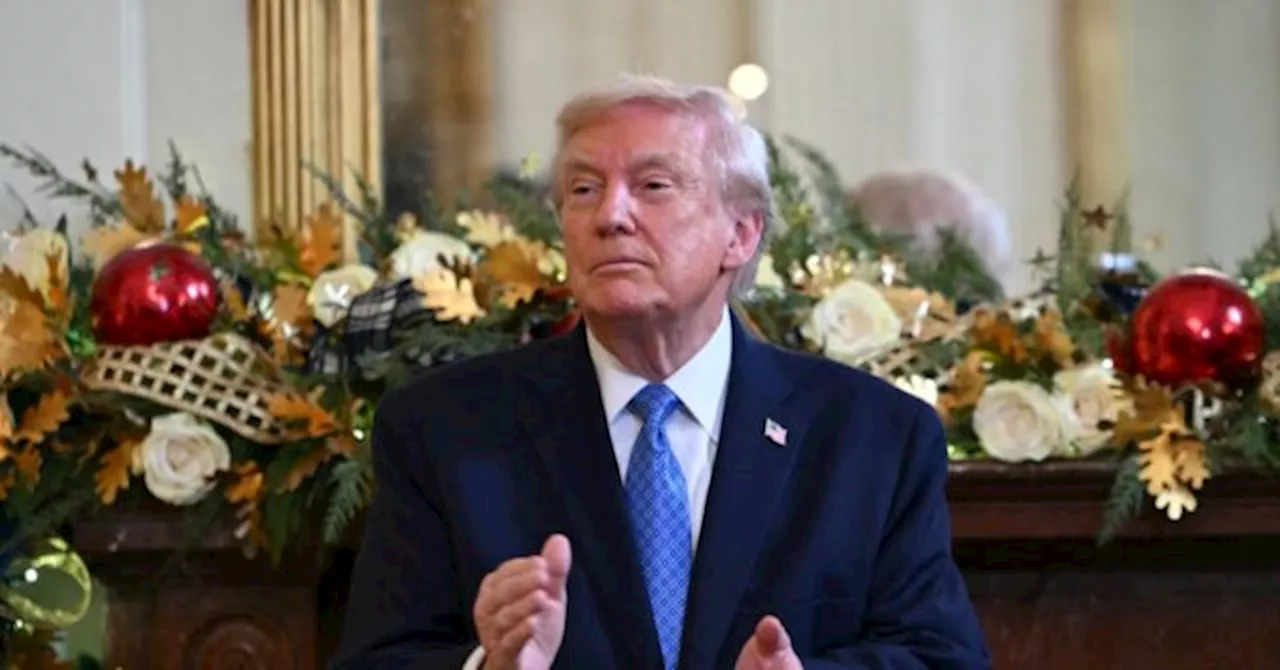
President Donald Trump has ordered a comprehensive blockade of all sanctioned oil tankers entering or leaving Venezuela. This decision, announced on June 6, 2023, escalates the pressure on the government led by Nicolás Maduro, which the U.S. has accused of engaging in various illegal activities, including terrorism and drug trafficking. Trump’s directive aims to compel the return of U.S. assets that the administration claims have been unlawfully seized by the Maduro regime.
In a statement released via social media, Trump emphasized that Venezuela is “completely surrounded by the largest armada ever assembled in the history of South America.” The blockade follows a previous announcement regarding the closure of Venezuelan airspace. Trump asserted, “The shock to them will be like nothing they have ever seen before—until such time as they return to the United States all of the oil, land, and other assets that they previously stole from us.”
The blockade is part of a broader strategy, as Trump designated the Venezuelan government as a foreign terrorist organization. He highlighted concerns over the regime’s use of oil revenues to finance criminal activities, stating, “The illegitimate Maduro regime is using oil from these stolen oil fields to finance themselves, drug terrorism, human trafficking, murder, and kidnapping.”
This latest development signifies a marked increase in tensions between the United States and Venezuela. In response, Maduro’s government condemned the U.S. actions, describing them as an irrational attempt to impose a naval blockade. The regime’s spokesperson urged citizens in the U.S. and around the world to reject what they called an “extravagant threat by any means necessary.”
Maduro, addressing the situation, emphasized the need for Venezuelan workers to defend the country’s right to free trade, particularly concerning oil exports. He called for international support to protest against what he characterized as U.S. piracy. Maduro stated, “The oil working class must proceed to defend the right to free trade of Venezuela’s main export product.”
As this blockade takes effect, analysts are closely monitoring the potential implications for global oil markets. The U.S. military’s increased presence in the region and the seizure of oil tankers have already contributed to rising tensions. The ongoing situation reflects a complex interplay of geopolitical interests that could have far-reaching consequences, both regionally and globally.
The U.S. government’s actions follow a long-standing policy aimed at dismantling Maduro’s influence and restoring democratic governance in Venezuela. Critics argue that these measures could exacerbate the humanitarian crisis in the country, where many citizens are already facing dire shortages of basic necessities.
As the situation unfolds, the international community’s response will be crucial in determining the effectiveness of the blockade and its impact on Venezuelan society and governance.