








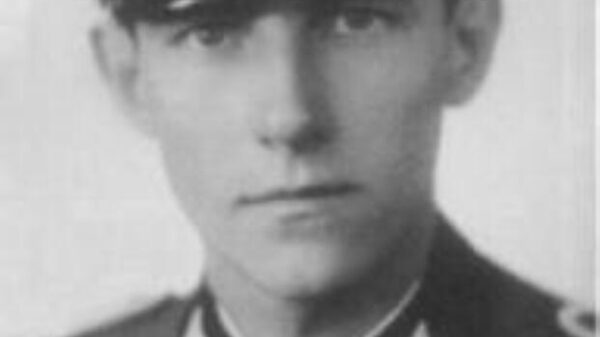



























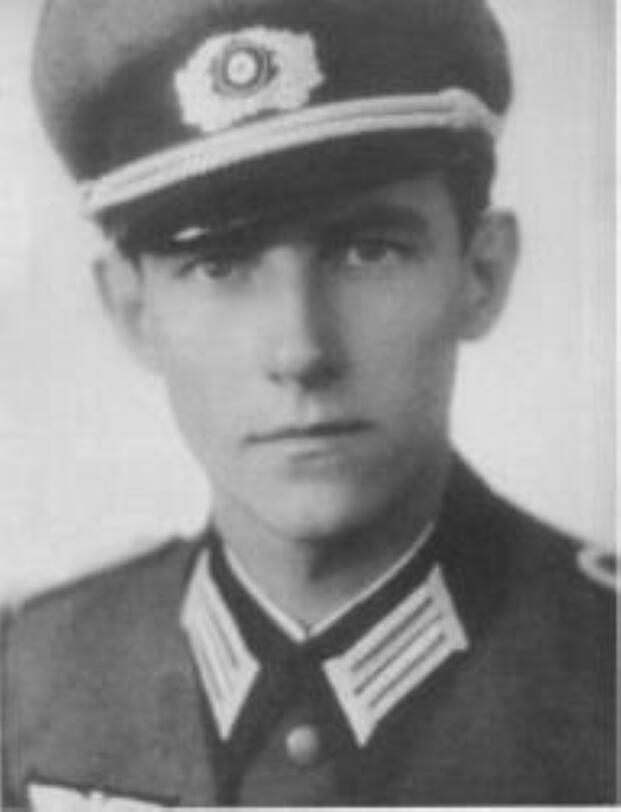
In a poignant episode from the Battle of Hurtgen Forest, a German officer sacrificed his life while attempting to save a wounded American soldier on November 12, 1944. Lieutenant Friedrich Lengfeld of the 275th Infantry Division disregarded his own safety to lead a rescue mission into a dangerous minefield, ultimately paying the ultimate price for his bravery.
The Battle of Hurtgen Forest, which spanned from September 1944 to February 1945, was one of the longest and bloodiest confrontations on the Western Front. American forces aimed to advance through this treacherous terrain, which included dense forests and fortified German positions, to secure control over the Rur River dams. Despite their efforts, American troops faced significant challenges, suffering at least 33,000 casualties, with some estimates exceeding 55,000 when considering non-combat losses. German forces incurred approximately 28,000 casualties during the campaign.
Lt. Lengfeld, born on September 29, 1921, in Grunfelde, East Prussia, assumed command of the 2nd Company, Fusilier Battalion within the 275th Infantry Division in early October 1944. Having previously endured injuries on the Eastern Front, he quickly gained a reputation for his leadership style. His communications runner, Hubert Gees, noted that Lengfeld inspired his men by saying, “Follow me,” rather than simply directing them to proceed.
As the battle raged on, conditions deteriorated for both sides. Lengfeld’s unit was engaged near Vossenack, facing relentless combat. Soldiers were exhausted, suffering from hunger, lice, and the unforgiving cold. Despite these hardships, they remained steadfast, determined to slow the American advance.
On the morning of November 12, during an American withdrawal, a U.S. soldier inadvertently entered the Wilde Sau minefield and triggered a mine. His cries for help echoed across the battlefield, but no rescue attempt was initiated. After hours of hearing the soldier’s pleas, Lengfeld resolved to act. He ordered his men not to fire upon any American medics who might attempt to aid their comrade, demonstrating a profound sense of honor and humanity.
Realizing that no help was forthcoming, Lengfeld assembled a team of medics adorned with Red Cross vests and flags. He led them into the minefield, mindful of the anti-tank mines that his company had laid. Tragically, as he approached the wounded soldier, he stepped on an anti-personnel mine. The explosion resulted in severe injuries, ultimately leading to his death later that evening.
The fate of the American soldier remains unknown, as German troops returning to the area did not locate his body. Just five days later, another German soldier, Alfons Bösl, would also fall victim to the minefield.
Decades later, Gees reflected on Lengfeld’s sacrifice, stating, “With Lieutenant Lengfeld, I lost the best superior I ever had. He was an exemplary company leader.”
In an unprecedented act of respect, on October 7, 1994, retired Major General John Ruggles, who served during the battle, led American veterans in dedicating a monument to Lengfeld at the Hurtgen War Cemetery. This monument, which honors a German soldier by American veterans, stands as a testament to the complexity of war and the shared humanity that can emerge even in the darkest times. The plaque inscribed with the words, “No man hath greater love than he who layeth down his life for his enemy,” resonates powerfully, highlighting the extraordinary nature of Lengfeld’s sacrifice.
Today, Lieutenant Lengfeld rests at the Duren-Rolsdorf War Cemetery, alongside over 3,000 German war dead. The monument dedicated to him is believed to be the only memorial placed by American soldiers in a German war cemetery, symbolizing a rare moment of recognition and honor across enemy lines.