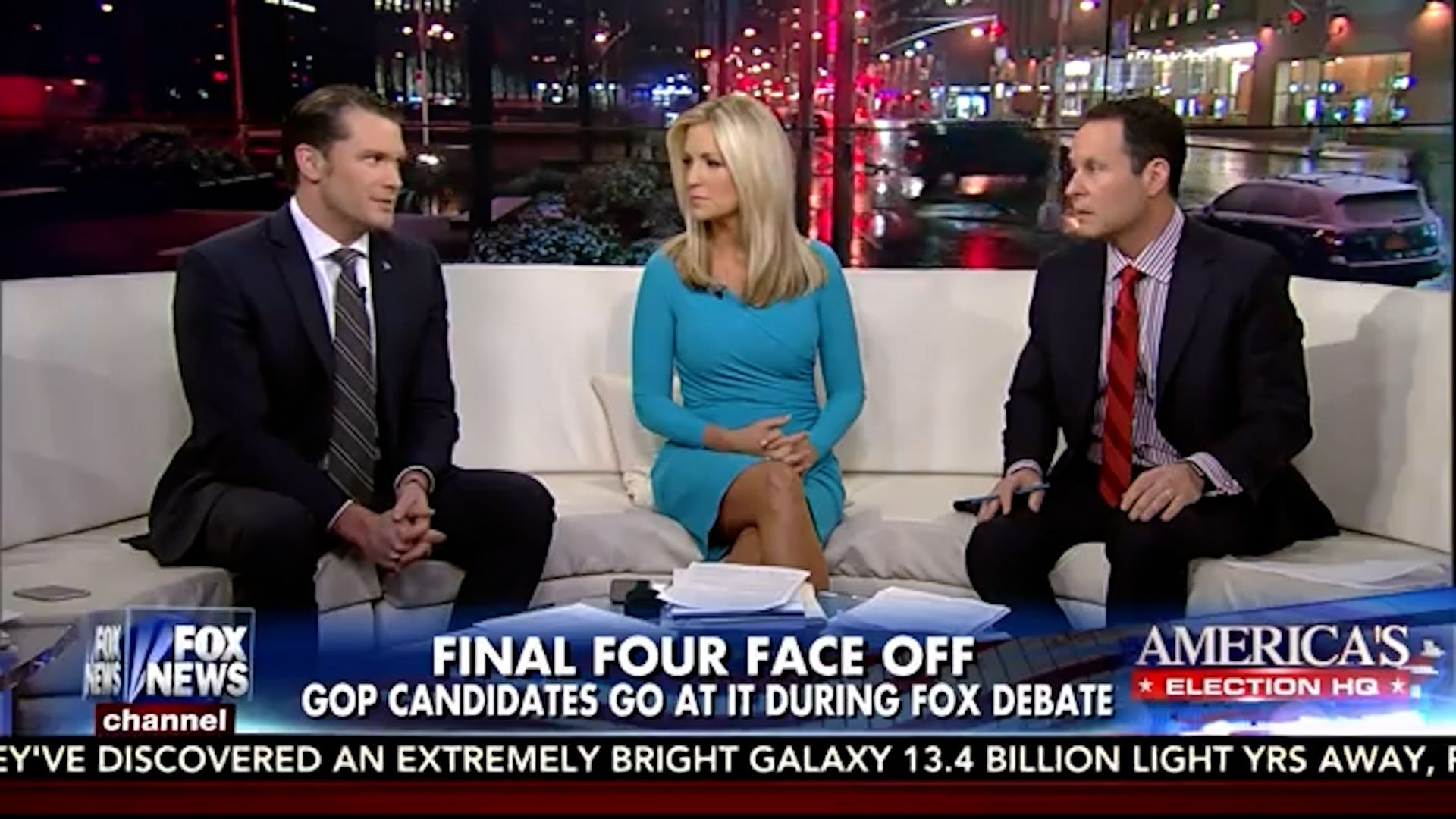
In 2016, Pete Hegseth, then a Fox News contributor, cautioned that military personnel have a duty to refuse unlawful orders, specifically addressing the potential presidency of Donald Trump. Hegseth’s warnings highlighted concerns raised by military experts about Trump’s extreme proposals, which some officials indicated could violate international law. His comments have gained renewed attention as he now serves as Trump’s Secretary of Defense, amidst ongoing discussions about the legality of military actions taken under the current administration.
In a March 2016 appearance on “Fox & Friends,” Hegseth stated, “You’re not just gonna follow that order if it’s unlawful,” emphasizing that service members must uphold the law. He reiterated this stance during another appearance on Fox Business, proclaiming that the military “won’t follow unlawful orders from their commander in chief.” These remarks came at a time when Trump was facing backlash for suggesting policies, such as targeting the families of terrorists and endorsing torture methods banned under military law.
During a Republican debate in March 2016, Trump was confronted by moderator Bret Baier about his previous comments regarding unlawful orders. In response, Trump asserted, “They won’t refuse. They’re not going to refuse me. Believe me.” This assertion was made as Trump solidified his position as the leading candidate in the Republican primaries following a successful Super Tuesday.
Hegseth, a former Army National Guard officer, was frequently called upon to discuss Trump’s national security proposals. He reiterated that military members could face legal repercussions for executing illegal commands. Following the debate, he appeared on Megyn Kelly’s show to express his concerns about Trump’s rhetoric. “What happens when people follow those orders, or don’t follow them? It’s not clear that Donald Trump will have their back,” he remarked, warning that Trump’s comments could push troops beyond ethical boundaries.
In a statement the day after the debate, Trump attempted to clarify his position, saying, “I will not order a military officer to disobey the law. It is clear that as president I will be bound by laws just like all Americans.”
Recently, a spokesperson for the White House, Anna Kelly, responded to concerns raised by Democratic lawmakers regarding unlawful orders, stating, “The military already has clear procedures for handling unlawful orders.” She criticized those who questioned Trump’s actions as reckless and irresponsible.
Hegseth’s past comments have gained significance as he leads a campaign against several Democratic lawmakers who have publicly urged troops to reject illegal orders. In recent weeks, he has labeled these lawmakers the “Seditious Six,” accusing them of spreading misinformation. He has initiated a Pentagon investigation into Arizona Sen. Mark Kelly, a retired Navy captain who participated in a video that cautioned military members about their legal obligations to refuse unlawful commands.
The Democratic lawmakers’ video warned of “threats to our Constitution” and reminded service members that they have a legal duty to reject orders that violate the law. “No one has to carry out orders that violate the law, or our Constitution,” they emphasized, encouraging troops to remain vigilant.
This video was released amid growing debate over the legality of US military strikes on suspected drug trafficking boats in the Caribbean and the Pacific, as well as the deployment of active-duty troops to US cities, which faced opposition from local governors.
Hegseth has criticized the Democrats’ message as a “politically motivated influence operation” that creates confusion regarding established legal processes. He believes that such actions undermine trust within the military and disrupt the chain of command.
As the discussion surrounding military orders and legality continues, Hegseth’s 2016 warnings serve as a reminder of the complexities surrounding civilian control of the military and the importance of legal adherence within armed forces. The ongoing debate highlights the tension between national security policies and established legal frameworks.