































The Ensight Skills Center in Fort Collins, Colorado, is making significant strides in supporting residents facing vision loss. This facility, along with the Curtis Strong Center, offers a range of services designed to help individuals maintain their independence. From low-vision optometry to occupational therapy and mobility training, Ensight is dedicated to providing comprehensive support for those navigating vision impairment.
Melody Bettenhausen, CEO of Ensight Skills Center, emphasized the organization’s unique approach: “Our program is comprehensive, and our mission is to help people find services and resources to continue to be productive in society and to be independent.” This focus on independence is at the heart of the services offered.
Foundation and Growth of Ensight Skills Center
Founded in 2001 by former CEO Denny Moyer in partnership with the Fort Collins Lions Club, the Ensight Skills Center was established to fill a critical gap in local support for individuals with visual impairments. Before its inception, many in Northern Colorado struggled with vision loss without access to necessary resources.
Moyer and the Lions Club envisioned a center that would provide training and tools essential for thriving at home, school, and work. This vision led to the creation of the Ensight Skills Center, which later expanded to include the Curtis Strong Center in 2007. Recently, the Curtis Strong Center relocated to the Greeley Medical Clinic at 1900 16th St., Ste. 120, making it more accessible for patients.
In addition to its main locations, Ensight operates six satellite sites across Colorado, extending its reach to underserved rural areas. The organization also features a mobile clinic to serve remote communities, ensuring that those in need can access vital services.
Comprehensive Support for Independence
The Ensight Skills Center and Curtis Strong Center specialize in low-vision rehabilitation, emphasizing empowerment over treatment. “We only do the rehab,” Bettenhausen explained, highlighting their focus on helping individuals learn skills and find tools tailored to their remaining vision.
Each client is supported by a dedicated rehabilitation team, which may include a low-vision optometrist, occupational therapist, orientation and mobility specialist, and assistive technology professional. This team works collaboratively to assess the individual’s vision and challenges, creating a personalized plan that may involve:
– In-home or workplace occupational therapy visits
– Learning adaptive daily living skills
– Utilizing large-print labels and task lighting
– Practicing safe kitchen skills
Small adjustments can significantly enhance independence, such as marking appliances or using high-contrast cutting boards. “That’s our goal: to help people continue to do the things they have to do and want to do,” Bettenhausen stated.
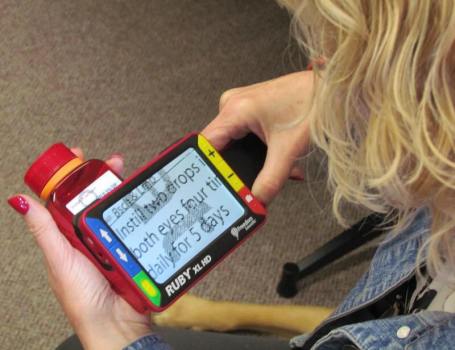
The centers also provide crucial orientation and mobility training, which includes white cane training, guide dog assessments, and community travel skills. Furthermore, Ensight supports individuals in selecting appropriate assistive technology, ranging from handheld magnifiers to smartphone accessibility features.
In the past year, the Ensight Skills Center and Curtis Strong Center served 830 clients, a number that continues to rise as awareness of their services grows. The team, comprising 14 trained professionals, is committed to expanding their reach and impact in the community.
Community Engagement and Support
Community involvement plays a crucial role in the ongoing operations of the Ensight Skills Center. Bettenhausen encourages the public to support their mission through various means, including visiting the centers, donating to assistive device programs, and volunteering. The organization is seeking to recruit at least ten more volunteers to help meet the increasing demand for their services.
“Just reach out and get a hold of us,” Bettenhausen urged. “We are here to serve our community.”
The Ensight Skills Center and Curtis Strong Center are dedicated to ensuring that individuals with vision loss do not face their challenges alone. As they continue to expand their services, the centers remain a beacon of hope and support for Coloradans striving to live independently.