A prominent physician has challenged the reasoning provided by former President Donald Trump for an MRI scan he underwent in October 2023. Dr. Jonathan Reiner, a cardiologist with over 30 years of experience, including as the physician for former Vice President Dick Cheney, stated that Trump’s claim of the scan being preventive is “not plausible.”
In an interview with CNN, Dr. Reiner emphasized that an MRI cannot be considered part of “routine, preventive care,” as Trump had suggested. He noted that while the White House confirmed Trump had both a chest scan and an abdominal scan, the lack of clarity surrounding the specifics of the MRI raises concerns. Dr. Reiner stated, “There’s no chance that this was just sort of routine preventative care. First of all, it’s not part of routine preventative care… They disclosed that he had a chest scan and an abdominal scan.”
The physician also criticized the vagueness of the medical information released. “The president’s doctor didn’t even disclose what kind of scan. The president said MRI; all that the president’s physician said was advanced imaging. Did he have an MRI? Did he have a CT? Did he have both?” Dr. Reiner pointed out that the absence of details about a brain scan further complicates the narrative.
He suggested that the MRI Trump received at Walter Reed National Military Medical Center was likely a response to a “symptom or sign of concern.” The Daily Beast reported on Dr. Reiner’s statements, underscoring the medical community’s skepticism regarding Trump’s explanation.
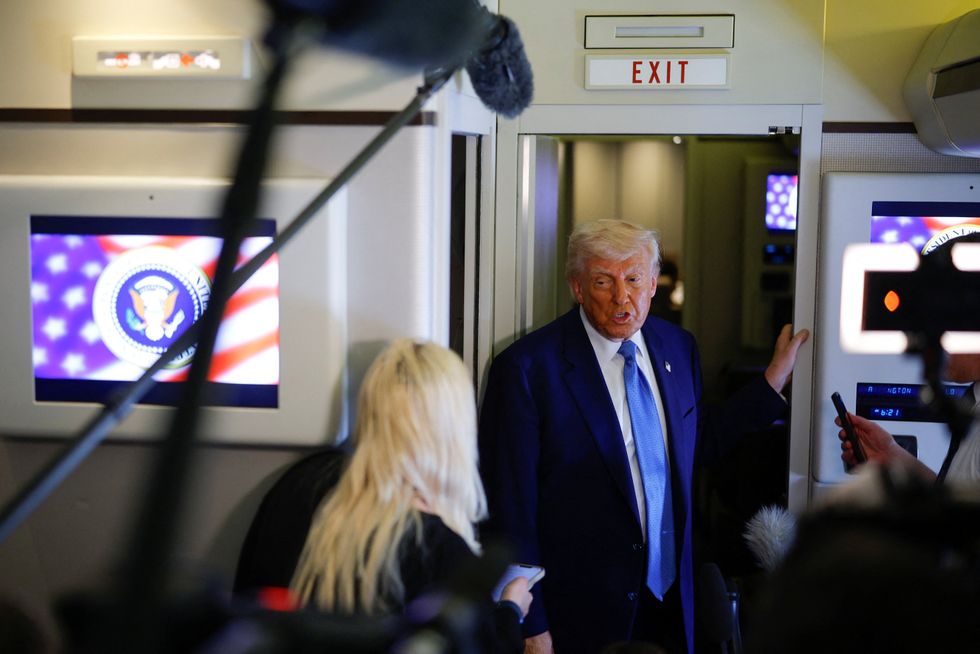
When pressed for details on the MRI during a flight aboard Air Force One, Trump dismissed concerns about his cognitive health. He stated, “It wasn’t the brain, because I took a cognitive test and aced it, I got a perfect mark. Which you would be incapable of doing!”
The situation surrounding Trump’s MRI has drawn scrutiny from various analysts. Some expressed concerns that his refusal to release the results has only intensified speculation about his health. Steve Benen of MS NOW remarked that the unfolding events have become “weirder” with each of Trump’s comments, rather than providing clarity. He highlighted an Associated Press headline that read, “Trump says he’ll release MRI results but doesn’t know what part of his body was scanned.”
Benen also noted the complexities surrounding cognitive exams, which are designed to detect signs of dementia and other neurodegenerative conditions. He pointed out that a patient can perform well on such tests yet still require further examination through imaging.
As the discourse around Trump’s health continues, the demand for transparency grows. The medical community remains vigilant, seeking clarity on the implications of Trump’s recent MRI and the rationale behind it.