








































Massachusetts Institute of Technology (MIT) has unveiled the Technologist Advanced Manufacturing Program (TechAMP), a new initiative aimed at enhancing manufacturing education across the United States. Launched in the fall of 2023, this 12-month certificate program seeks to equip workers with essential manufacturing skills, leveraging both in-person and online training.
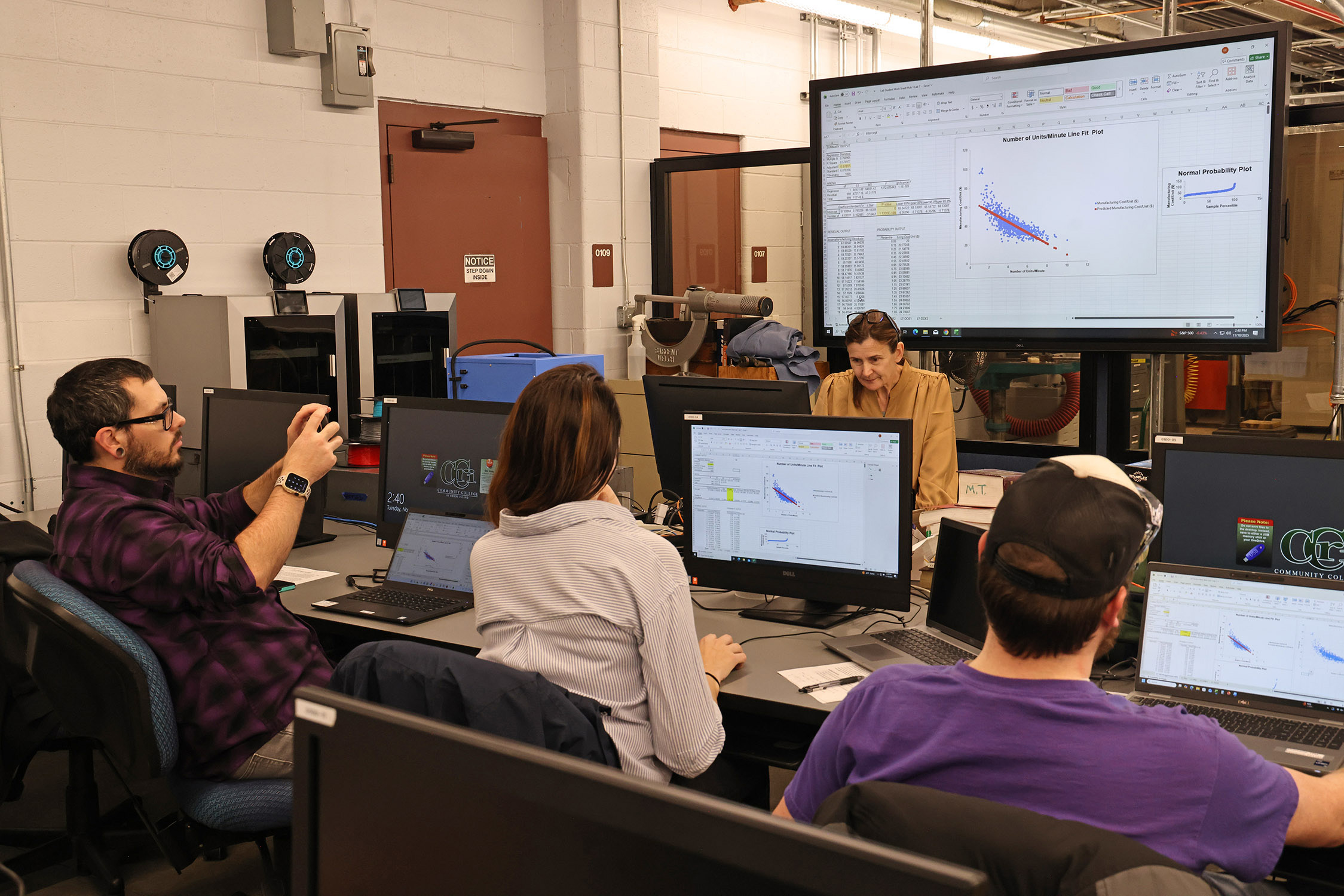
Developed with funding from the U.S. Department of Defense, TechAMP combines hands-on lab instruction at participating institutions with online lectures from MIT faculty and interactive simulations. This innovative approach also includes capstone projects that allow students to tackle real manufacturing issues, potentially saving their firms significant costs.
John Liu, a principal research scientist in MIT’s Department of Mechanical Engineering and co-principal investigator of TechAMP, emphasized the program’s role in bridging the gap between traditional engineering and technician roles. “We think there’s a gap between the traditional worker categories of engineer and technician, and this technologist training fills it,” Liu stated. The aim is to create new career pathways that empower workers to think beyond individual tasks, fostering a broader understanding of manufacturing operations.
TechAMP is being offered in collaboration with several educational institutions, including the University of Massachusetts at Lowell, Ohio State University, and the Community College of Rhode Island. The program has attracted more than 70 students in its inaugural cohort, showcasing a growing interest in advanced manufacturing education.
Innovative Curriculum to Meet Industry Needs
The program is structured around a “hub-and-spoke” model, focusing on core manufacturing principles as the central hub, while addressing specific skill areas identified by industry partners as critical. These areas currently include mechatronics, automation programming, robotics, and digital manufacturing, among others. As Liu noted, “The hub concepts are what defines manufacturing. We need to teach this undervalued set of principles to the workforce.”
Students participating in TechAMP have reported positive experiences, with many feeling more confident in their abilities. Nicole Swan, a participant from the manufacturing firm Proterial, remarked, “It’s been a confidence booster. This has really shown me so many different opportunities for what I could do in the future.”
The program also incorporates a capstone project component, where students analyze challenges within their own companies. This practical application not only benefits the students but also provides direct value for their employers, who may see improved efficiency and cost savings as a result of the training.
Industry Support and Future Expansion
The TechAMP program has garnered support from various industry stakeholders, including Michael Trotta, CEO of Crystal Engineering, who commented on the high demand for skilled workers in manufacturing. “There are so many manufacturing jobs that don’t need a four-year degree but do require a very high skill level,” Trotta stated. He believes that TechAMP represents a logical step toward developing a sustainable workforce that can command competitive salaries.
The program is part of MIT’s broader Initiative for New Manufacturing (INM), which aims to reinvigorate the U.S. manufacturing sector. John Hart, head of MIT’s Department of Mechanical Engineering and faculty co-director of INM, expressed excitement about the program’s potential to cultivate innovators and problem-solvers in manufacturing.
As TechAMP continues to evolve, its leaders are in discussions with educational networks in several manufacturing-heavy states to explore potential partnerships. Research from Ben Armstrong at MIT’s Industrial Performance Center highlights that a significant portion of titled engineers in manufacturing do not possess engineering degrees, underscoring the importance of formal training programs like TechAMP.
This initiative not only aims to enhance the skill set of the current workforce but also to reshape the perception of manufacturing jobs, creating real pathways for advancement. As MIT President Sally A. Kornbluth remarked during the INM launch event in May 2025, “Helping America build a future of new manufacturing is a perfect job for MIT.”
With its innovative curriculum and strong industry backing, TechAMP is poised to make a meaningful impact on the future of manufacturing education in the United States.
























