








































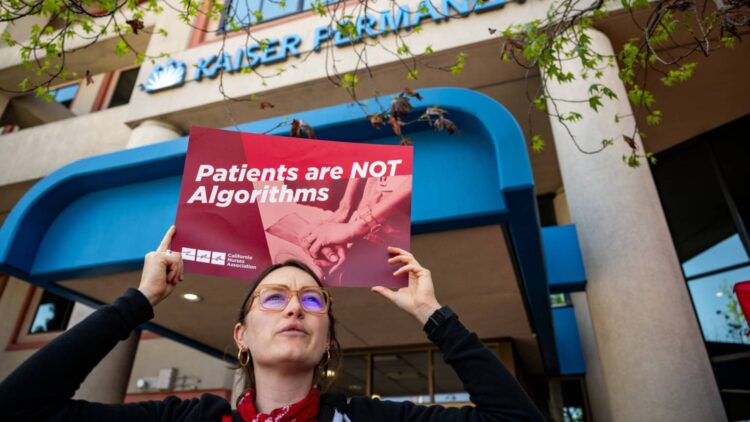
On November 18, 2025, nurses from the New York State Nurses Association (NYSNA) rallied outside City Hall in New York City to voice their concerns over the integration of artificial intelligence (AI) in healthcare. The event preceded their testimonies to the city council regarding hospital safety and the current state of nursing. Nancy Hagans, president of NYSNA and a nurse at Maimonides Medical Center, called for hospitals to halt investments in AI technologies, arguing that funds should instead prioritize patient care.
During the rally, Hagans emphasized the need for hospitals to prioritize safety over profit, stating, “Now is the time for hospitals to step up and take patient safety seriously. We have seen hospitals like Mount Sinai try to obscure the extent to which they have prioritized their profit-making enterprises over the patients of this city. We are here to say that enough is enough.” The nurses expressed their frustrations through a newly created website, NYC Hospital Greed, which highlights unsafe working conditions and the focus on profits at the expense of patient care.
Hagans and her colleagues voiced their concerns that private hospitals, including Montefiore and New York-Presbyterian, are choosing to invest in AI technologies rather than enhancing patient safety and staffing levels. “The wealthiest hospitals need to stop playing with artificial intelligence and invest in caring for those who need it most,” she added.
Hagans framed the struggle in two parts: defending vulnerable patients against the policies of the Trump Federal Administration and confronting the management practices of private hospitals that undermine healthcare standards. She remarked, “The second front is against the private hospitals in our city, which are fighting against all the achievements nurses have made to stabilize the workforce and improve and protect patient care.”
Hospital Responses to AI Integration
In response to the nurses’ concerns, Maimonides Medical Center stated that it employs a rigorous review process for any new technology, including AI, which is guided by medical professionals. The hospital asserted that AI can enhance clinical outcomes and improve the patient experience.
Other healthcare institutions, such as New York-Presbyterian, also emphasized their commitment to innovation. A spokesperson noted, “We are always interested in innovations that can improve the speed and accuracy of examinations, diagnosis, and treatment, helping our teams deliver the best outcomes for patients and the most compassionate care.”
The rally highlighted not only the nurses’ frustrations but also the broader implications of using AI in clinical settings. Denash Forbes, a nurse from Mount Sinai West, testified about her experiences, revealing that the hospital had invested $100 billion in AI technologies rather than focusing on increasing nursing staff. She criticized the lack of nurse involvement in discussions about technology that impacts patient care, stating, “The nurses were not involved in this discussion and had no role in creating the facility.”
Forbes elaborated on the challenges presented by AI, particularly the need for nurses to double-check AI outputs for errors. “When hospitals try to make cuts like this in safe patient care, mistakes are made, biases are amplified, and often more work is created,” she explained.
As the healthcare landscape evolves, the integration of AI into clinical practices remains a contentious issue. Nurses across New York continue to advocate for patient safety, emphasizing that technology should enhance—rather than compromise—care quality. The ongoing dialogue between healthcare providers and frontline workers is crucial for shaping a system that balances innovation with the fundamental need for patient care and safety.
























