








































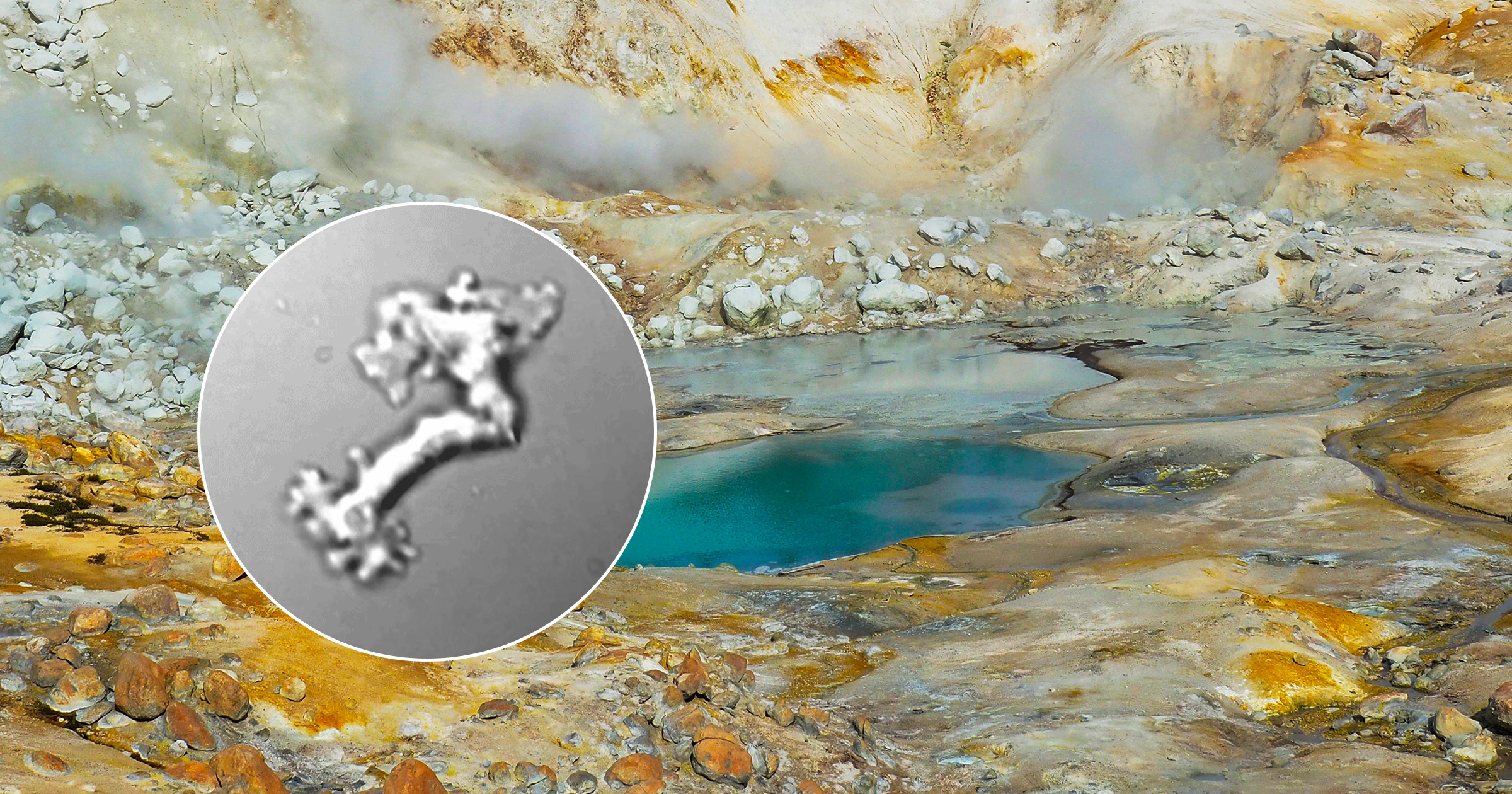
Researchers have made a groundbreaking discovery in the extreme environments of Lassen Volcanic National Park in California. They identified a remarkable organism known as the “fire amoeba,” scientifically named Incendiamoeba cascadensis, that can thrive in temperatures previously thought to be inhospitable for complex life forms. This tiny single-celled organism can divide at a scorching 145.4 degrees Fahrenheit (approximately 63 degrees Celsius), setting a new record for eukaryotic organisms.
The team, comprising scientists from Syracuse University and various European institutions, published their findings in a study that is currently awaiting peer review. The discovery challenges the long-held belief that only prokaryotes, such as bacteria, can survive extreme heat. Prokaryotes have been known to endure temperatures between 149 and 221 degrees Fahrenheit, with one archaean, Methanopyrus kandleri, reaching an upper limit of 251.6 degrees Fahrenheit.
In contrast, eukaryotes, which include animals, plants, fungi, and single-celled organisms like the fire amoeba, have historically been limited to much lower temperature thresholds. Until now, the known upper limit for eukaryotic life was believed to be around 131 to 140 degrees Fahrenheit. The emergence of Incendiamoeba cascadensis suggests that these limits may need reassessment.
Uncovering the Fire Amoeba’s Secrets
The research team discovered the fire amoeba in a hot spring stream that exhibited a neutral pH, differing from the acidic pools typical of the area. “It’s the most uninteresting geothermal feature you’ll find in Lassen,” remarked Beryl Rappaport, a microbiologist at Syracuse University. Initially, microscopic examinations of the water yielded no signs of life, but introducing nutrients and heating the samples to 134.6 degrees Fahrenheit revealed the amoeba actively moving and replicating.
The response of the amoeba to higher temperatures was equally astonishing. As the temperature increased to 145.4 degrees Fahrenheit, the organism continued to divide. Even when temperatures reached 158 degrees Fahrenheit, the amoeba entered a state of dormancy known as encystment, forming a protective shell that allows it to withstand harsh conditions. When temperatures drop, it can revert to its active state, continuing to grow and reproduce.
The researchers also decoded the fire amoeba’s genome, revealing a wealth of genes linked to proteostasis, genome stability, and environmental sensing. These findings provide insights into the molecular mechanisms that enable the amoeba to survive in such extreme conditions.
Implications for Future Research
This discovery has significant implications for the field of microbiology and our understanding of life in extreme environments. The researchers believe that there may be more eukaryotic organisms capable of thriving at high temperatures yet to be discovered. “We looked in one stream,” said Angela Oliverio, a microbiologist and co-author of the study. “Maybe we got extremely lucky, but we really don’t think that’s the case.”
The potential applications of this research extend beyond academic interest. The proteins found within the fire amoeba could lead to the development of “thermostable proteins,” with valuable uses in biotechnology.
Furthermore, this discovery raises intriguing possibilities regarding the existence of life beyond Earth. Researchers have speculated that similar extremophiles could inhabit ancient riverbeds or ice caps on Mars, suggesting that life may find a way in even the most inhospitable environments.
As scientists continue to explore the boundaries of life on our planet, the fire amoeba serves as a potent reminder of nature’s resilience and adaptability.
























