








































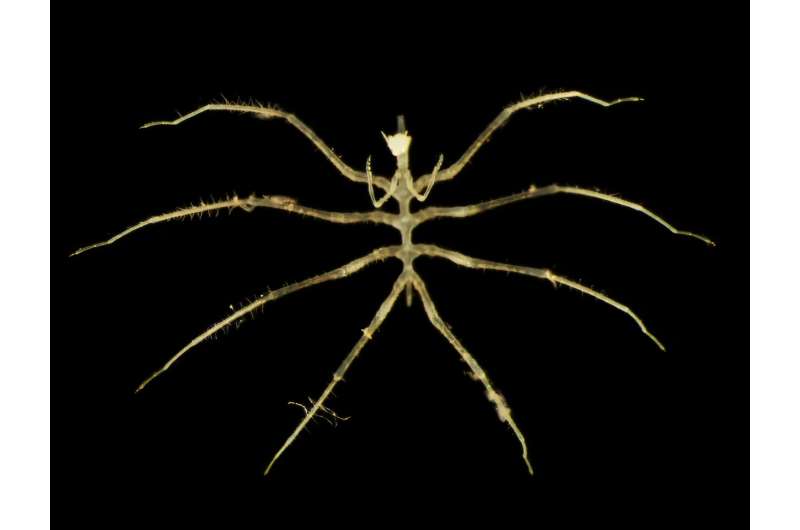
A recent international study has uncovered numerous new species at a depth of 4,000 meters in the Pacific Ocean during trials for deep-sea mining. Conducted by marine biologists from various countries, this research indicates that while mining activities may have less environmental impact than previously anticipated, significant biodiversity loss still occurs in the paths of mining machinery.
The study, published in Nature Ecology and Evolution, highlights the growing global demand for critical metals, which are essential for technologies related to the green transition. According to Thomas Dahlgren, a marine biologist at the University of Gothenburg and one of the project leaders, “Critical metals are needed for our green transition, and they are in short supply. Several of these metals are found in large quantities on the deep-sea floor, but until now, no one has shown how they can be extracted or what environmental impact this would have.”
Significant Findings from the Deep Sea
The extensive research was conducted in compliance with guidelines set forth by the International Seabed Authority (ISA), focusing on baseline studies and environmental impact assessments. Over five years, scientists have cataloged marine life in the Clarion-Clipperton Zone, an area between Mexico and Hawaii. The results reveal that the number of marine animals decreased by 37%, with species diversity declining by 32% in the areas disturbed by mining activities.
“Our study required 160 days at sea and five years of work,” Dahlgren explained. “This will be important for the ISA, which regulates mineral mining in international waters.”
The research team identified a total of 788 species from a sample of 4,350 animals larger than 0.3 mm. The deep-sea environment, characterized by extreme nutrient scarcity and absence of sunlight, yielded a surprising diversity of life, including marine bristle worms, crustaceans, and mollusks such as snails and mussels.
Unexplored Biodiversity and Future Risks
With over 13 years of experience in the Clarion-Clipperton Zone, Dahlgren noted that this represents the largest study conducted in this region. The inventory revealed that many species have not been previously described, making molecular (DNA) data vital for understanding the biodiversity and ecological dynamics of the seabed.
Researchers observed natural changes in seabed communities, likely influenced by fluctuations in food availability. However, the full extent of species distribution across the Pacific’s deep-sea floors remains largely unknown. “It is now important to try to predict the risk of biodiversity loss as a result of mining,” said Adrian Glover, senior author from the Natural History Museum of London. “This requires us to investigate the biodiversity of the 30% of the Clarion-Clipperton Zone that has been protected.”
This research underscores the delicate balance between resource extraction and environmental preservation, as the demand for critical metals continues to rise. The findings serve as a crucial reminder of the importance of understanding deep-sea ecosystems before proceeding with large-scale mining initiatives.
For further details, refer to the study by Eva C. D. Stewart et al., titled “Impacts of an industrial deep-sea mining trial on macrofaunal biodiversity,” published in Nature Ecology & Evolution in 2025.
























