








































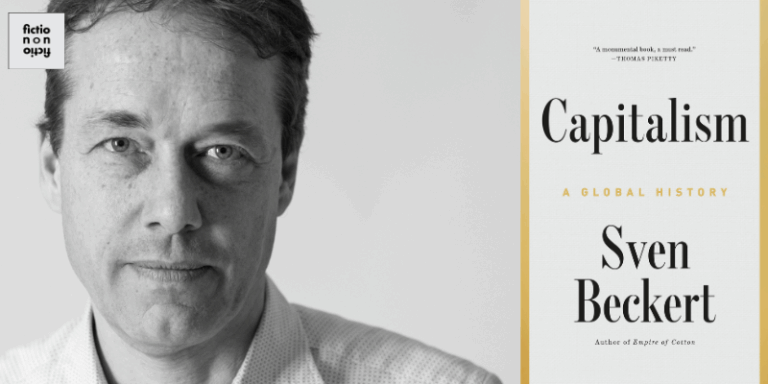
Pulitzer Prize finalist Sven Beckert recently discussed his new book, Capitalism: A Global History, on the podcast hosted by Whitney Terrell and V.V. Ganeshananthan. Beckert characterizes capitalism as a dynamic process that significantly influences human interactions and daily life. He emphasizes its evolution over the past thousand years, shaped by diverse actors, including merchants, corporate leaders, and those resisting oppression. His analysis spans the profound global effects of capitalism, its role in technological advancement, and the necessity for a nuanced understanding of its inherent inequalities.
In his conversation, Beckert articulated how capitalism is not solely confined to urban environments but also deeply rooted in rural areas. He highlighted the devastating consequences of capitalism, alongside its capacity to foster innovation. For instance, he pointed to the historical impact of major technological shifts, from the steam engine to the rise of artificial intelligence (AI).
Capitalism’s Evolution and Implications for the Future
Beckert underscored a critical observation: capitalism is a human-constructed order, subject to change. He noted that the distribution of productivity gains has varied significantly throughout history. In the mid-20th century, particularly during the 1950s and 1960s, productivity benefits were more evenly shared across American society. Conversely, the technological advancements of the 2000s led to a concentration of wealth among a select few.
Addressing the rise of AI, Beckert posed essential questions about future economic dynamics. He stated, “The question is not whether AI is a good or bad thing, but rather, who will benefit from potential productivity gains?” This inquiry resonates amid debates about AI’s role in reshaping labor markets and economic structures.
Beckert’s book offers historical insights that can inform contemporary discussions about economic equity. He pointed out that while inequality is not a new phenomenon, its manifestations have changed over time. He cited a historical example: between 1880 and 1914, the wealthiest decile in countries like France, Britain, and Sweden controlled between 80 to 90 percent of national prosperity. Such historical precedents suggest that periods of wealth concentration can lead to transformative changes.
Rethinking Inequality in a Technological Era
Beckert argued that current levels of inequality are unsustainable within democratic societies. He noted, “This radical form of inequality poses challenges to the stability of political systems.” He acknowledged the potential of AI to exacerbate existing disparities, where only a handful of individuals might reap the rewards of technological advancements.
Through historical context, Beckert encourages a reevaluation of capitalism’s trajectory. He expressed hope that society could harness AI’s potential to create a more equitable future. “We live in what is likely the richest society in history,” he remarked, emphasizing humanity’s capability to address issues like poverty and access to education and healthcare.
In conclusion, Beckert’s insights prompt a critical examination of how society can navigate the challenges posed by capitalism and technology. He asserts that the future is not predetermined; rather, it is shaped by collective choices and actions. The conversation highlighted the importance of recognizing capitalism as a human-made system, one that can be reformed to foster a more just society.
For further insights, listeners can access the full episode on various platforms, including iTunes, Google Play, and Spotify, or stream it directly from the podcast’s official website.
























