








































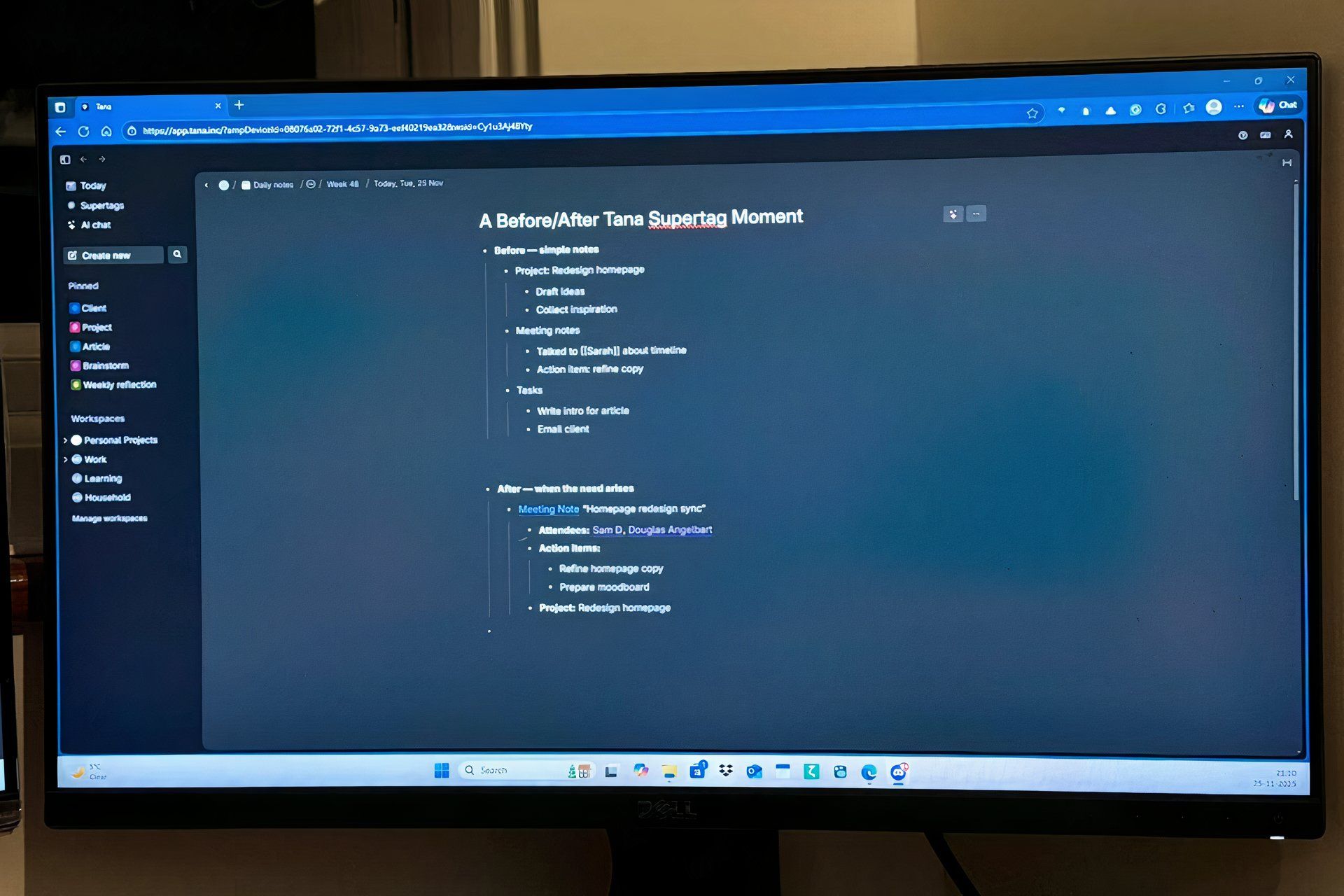
UPDATE: A revolutionary new approach to using the Tana productivity app is taking the internet by storm, emphasizing simplicity over complexity. Users are discovering they can organize their lives effectively without delving into Tana’s advanced features like Supertags and complex workflows.
This urgent shift comes as many first-time users abandon Tana after becoming overwhelmed by its robust capabilities. Reports indicate that countless individuals, after spending hours learning about intricate systems, quit within a week, frustrated by the app’s perceived complexity. The new methodology encourages users to start with a straightforward outliner, capturing thoughts and tasks organically without the burden of extensive setup.
The appeal of this approach is clear: it allows users to engage with Tana without the productivity guilt often associated with high-tech systems. Users can utilize basic organizational features—like simple lists and daily pages—transforming their productivity experience.
Every morning, Tana automatically generates a Daily page, functioning as a catch-all for miscellaneous thoughts, meeting notes, and ideas. This first step eliminates the stress of immediate categorization, enabling users to focus on capturing information swiftly. The outliner structure supports nested lists, allowing projects to expand from single bullet points into detailed sub-bullets, all without upfront definitions.
Furthermore, the drag-and-drop interface simplifies the organization process, enabling users to easily move relevant nodes to designated pages like Work, Personal Projects, and Learning. The casual user experience is enhanced by Tana’s backlinks, which automatically connect related notes without any setup. This feature allows for a seamless web of information, enriching the user’s understanding of ongoing projects or conversations.
With Tana’s powerful search functionality, users can quickly locate any notes or references across their workspace, significantly reducing the anxiety that often accompanies traditional organizational systems. The search capability allows retrieval based on vague keywords and related topics, making it easier to find information without categorizing every note.
However, experts caution that this simplified approach may not cater to everyone. For individuals managing complex projects with multiple stakeholders, the basic features could prove limiting. As users identify their needs over time, they can gradually incorporate Tana’s advanced features, creating a personalized productivity system that grows organically with their requirements.
Tana’s recent user feedback highlights the emotional impact of productivity systems. Many report feeling a sense of relief and control as they shift away from overwhelming configurations toward a more manageable experience. This method not only enhances productivity but also nurtures a healthier relationship with work and personal projects.
As this new methodology spreads, users are encouraged to share their experiences, creating a community of productivity enthusiasts who prioritize effectiveness without complexity.
In conclusion, the latest developments in Tana’s usage signify a shift toward a more approachable and effective productivity tool. Users can now harness the power of Tana while sidestepping the overwhelming intricacies previously associated with advanced features. The community is excited to explore how this approach can reshape their productivity landscapes moving forward.
























