








































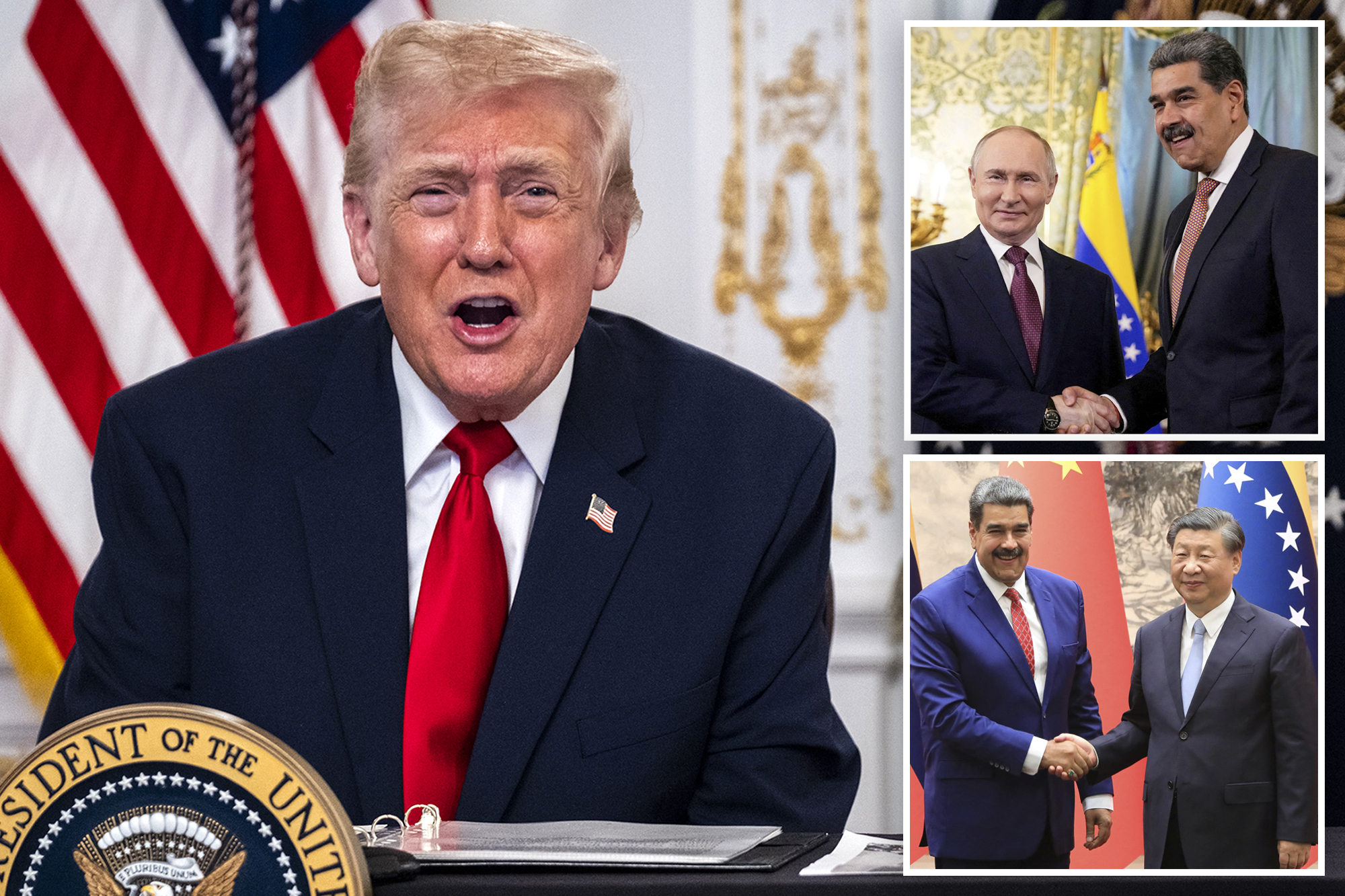
Venezuelan President Nicolás Maduro is experiencing a significant reduction in support from his traditional allies, Russia and China, as pressure from the United States escalates. With U.S. military maneuvers intensifying against Caracas, both nations appear to be reevaluating their commitment to Maduro’s regime, marking a notable shift in their historical backing.
Historically, Russia and China have provided Venezuela with military equipment, financial assistance, and training amid American hostility. However, as both nations grapple with their own economic and military challenges, their support for Maduro has diminished. In a striking contrast to previous engagements, where Russia showcased military might by sending two nuclear-capable bombers to Venezuela in 2018, the current level of assistance is markedly less robust. According to international relations expert Vladimir Rouvinski from Icesi University, Russia has only supplied two oil tankers recently to aid Venezuela in exporting its crude oil to China.
Rouvinski emphasized that these actions are insufficient if the U.S. opts for direct military intervention. He stated, “These are small gestures that are not going to be sufficient if the US moves to deadly force on Venezuela.” The geopolitical landscape has shifted, with both Russia and China opting to prioritize their strained relationships with the U.S. over their commitments to Venezuela.
Economic Alliances and Faltering Support
Venezuela has spent years cultivating relationships with Beijing, Moscow, and other adversaries of the West to establish a defense against American influence. Under former President Hugo Chavez, the country leveraged its considerable oil and mineral resources to secure over $30 billion in loans and agreements with China, Russia, Cuba, and Iran, aimed at bolstering the nation’s infrastructure.
However, the alliance seems to be crumbling under the weight of declining oil production and escalating civil unrest following Maduro’s ascent to power in 2013. The introduction of U.S. sanctions on Venezuela’s oil sector in 2019 further complicated these relationships. Today, China stands to incur significant losses if Maduro’s government collapses, having provided substantial military support over the years.
The situation mirrors the recent dynamics in Iran, where both Russia and China offered minimal assistance during a brief conflict involving American and Israeli forces. This ongoing pattern raises concerns about the reliability of support for nations like Venezuela during critical moments.
Calls for Assistance Amid Rising Tensions
Recently, Maduro reached out to Russian President Vladimir Putin, requesting defensive radars, aircraft repairs, and missiles as U.S. forces began to mobilize in the Caribbean. Documents reported by the Washington Post reveal Maduro’s direct appeals for increased military cooperation with Chinese President Xi Jinping, emphasizing the need for a united front against perceived U.S. aggression.
As the geopolitical chessboard evolves, the apparent withdrawal of support from key allies poses a growing dilemma for Maduro. The changing priorities of both Russia and China may leave the Venezuelan president increasingly isolated as he navigates the complexities of his regime’s survival amidst external pressures. The coming months will be crucial in determining the future of Venezuela and the extent of international support that remains available to Maduro.
























